
September 22, 2025
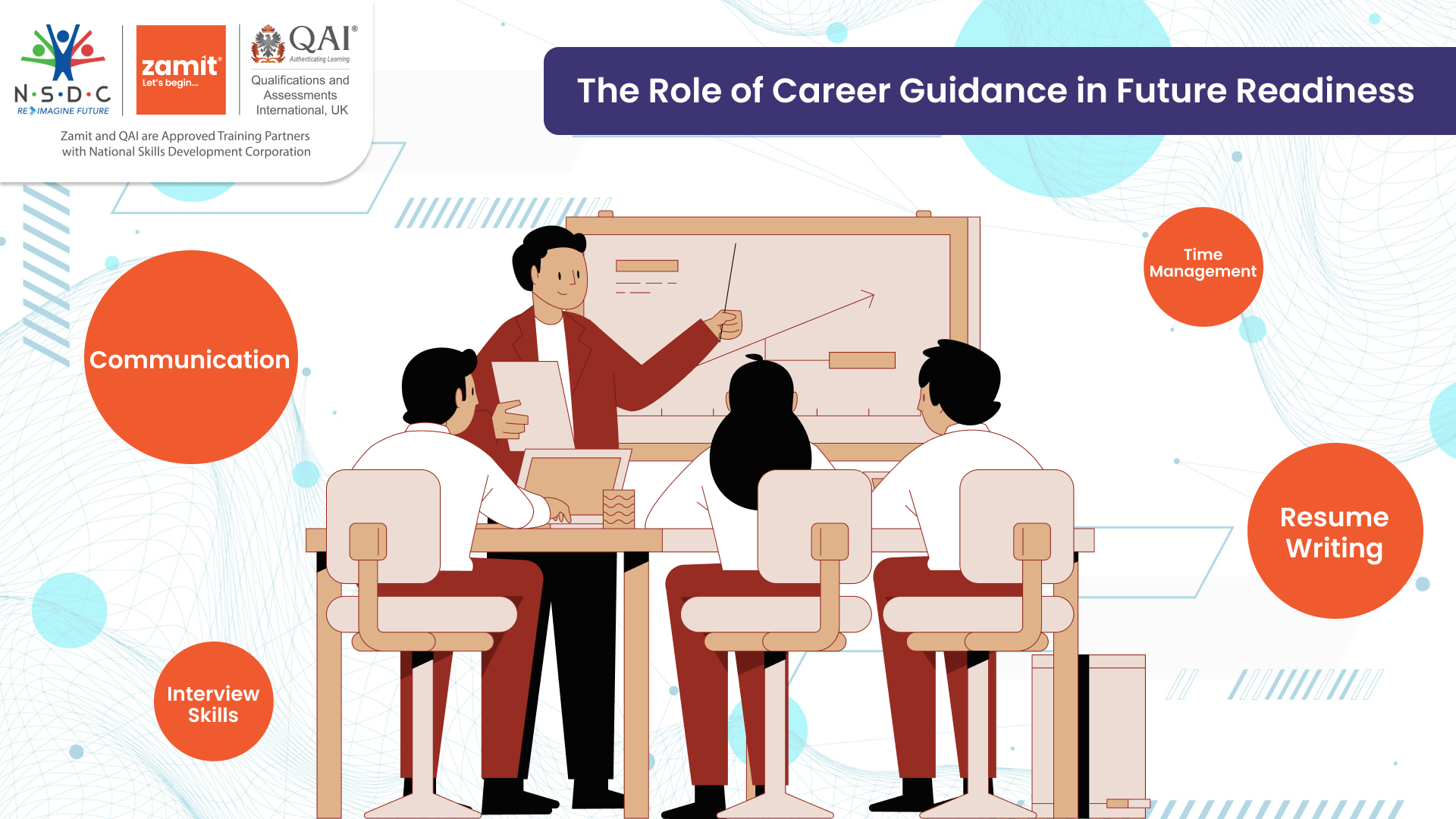
As teachers, we stand at the forefront of shaping young minds—not just for today’s classrooms but for tomorrow’s unpredictable world. Imagine a student graduating high school, armed with excellent grades but unsure about their next step in a job market evolving faster than ever. This scenario highlights the critical role of career guidance in future readiness.
In an era where 21st-century skills like critical thinking, adaptability, and digital literacy are paramount, career guidance isn’t just an add-on—it’s essential. It equips learners with the future skills for students that will define their success, ensuring holistic student development and long-term career readiness.
The World Economic Forum’s Future of Jobs Report 2025 outlines the seismic shifts in employment. By 2030, 170 million new jobs will emerge, while 92 million will disappear—resulting in a net gain of 78 million opportunities. This disruption impacts 22% of global jobs, emphasizing why career guidance in future readiness is crucial.
Roles in AI, sustainability, and data analytics are booming, while traditional jobs in manufacturing and administration are shrinking. For teachers, this means guiding students beyond rote learning and towards creativity, problem-solving, and collaboration—key future skills for students that prepare them for tomorrow’s world.
Research confirms the powerful link between career guidance and student development.
These findings prove that without structured career guidance in future readiness, students risk entering the workforce unprepared. Embedding career exploration into school curricula ensures that confusion is replaced with confidence and purpose.
Future readiness is more than academic excellence—it requires 21st-century skills. According to the WEF, half of all workers will need reskilling by 2030, particularly in technology and AI. For students, this means mastering future skills such as:
Through structured career guidance, students can explore interests early and build portfolios that showcase these competencies. For example, workshops on AI tools or sustainability projects directly connect education to real-world career readiness.
Career guidance bridges the gap between academics and application, making student development more holistic. Teachers can integrate self-assessment tools, mentorship programs, and industry insights into lessons.
Research from the National Association for College Admission Counselling (NACAC) shows that guided career planning improves college persistence and job satisfaction. This approach empowers students to navigate an uncertain job market with resilience while applying future skills for students through experiential learning.
One platform leading this educational transformation is Zamit. Through its internship programs for grades 5–12, Zamit provides students with hands-on experience in fields like data analytics, market research, and generative AI.
Mentored by experts such as Anuja Malaviya (Head of Data Analytics, MASH Virtual) and Abhijeet Mukherjee (former CEO, Zamit), over 500 interns have already benefited. The internships are flexible, online, and culminate in a globally recognized QAI (UK) certification—directly enhancing career readiness.
Zamit also offers master sessions, mentorship, and projects in financial literacy, AR/VR design, and design thinking—embedding 21st-century skills and future skills for students into real-world learning.
Teachers can integrate career guidance in future readiness by:
These steps align with research in the Journal of Career Development, which confirms that early career interventions boost employability and self-confidence.
The role of career guidance in future readiness cannot be overstated. As the job market undergoes disruption, students need 21st-century skills such as adaptability, creativity, and resilience.
With platforms like Zamit, schools can integrate career readiness into learning through internships, mentorships, and benchmarking. Teachers, parents, and policymakers share the responsibility of ensuring students gain not only knowledge but also the future skills for success.
By embedding career guidance into education today, we prepare students to thrive as tomorrow’s innovators, leaders, and changemakers. The journey toward future readiness starts now—because the jobs of tomorrow won’t wait.