
November 3, 2025
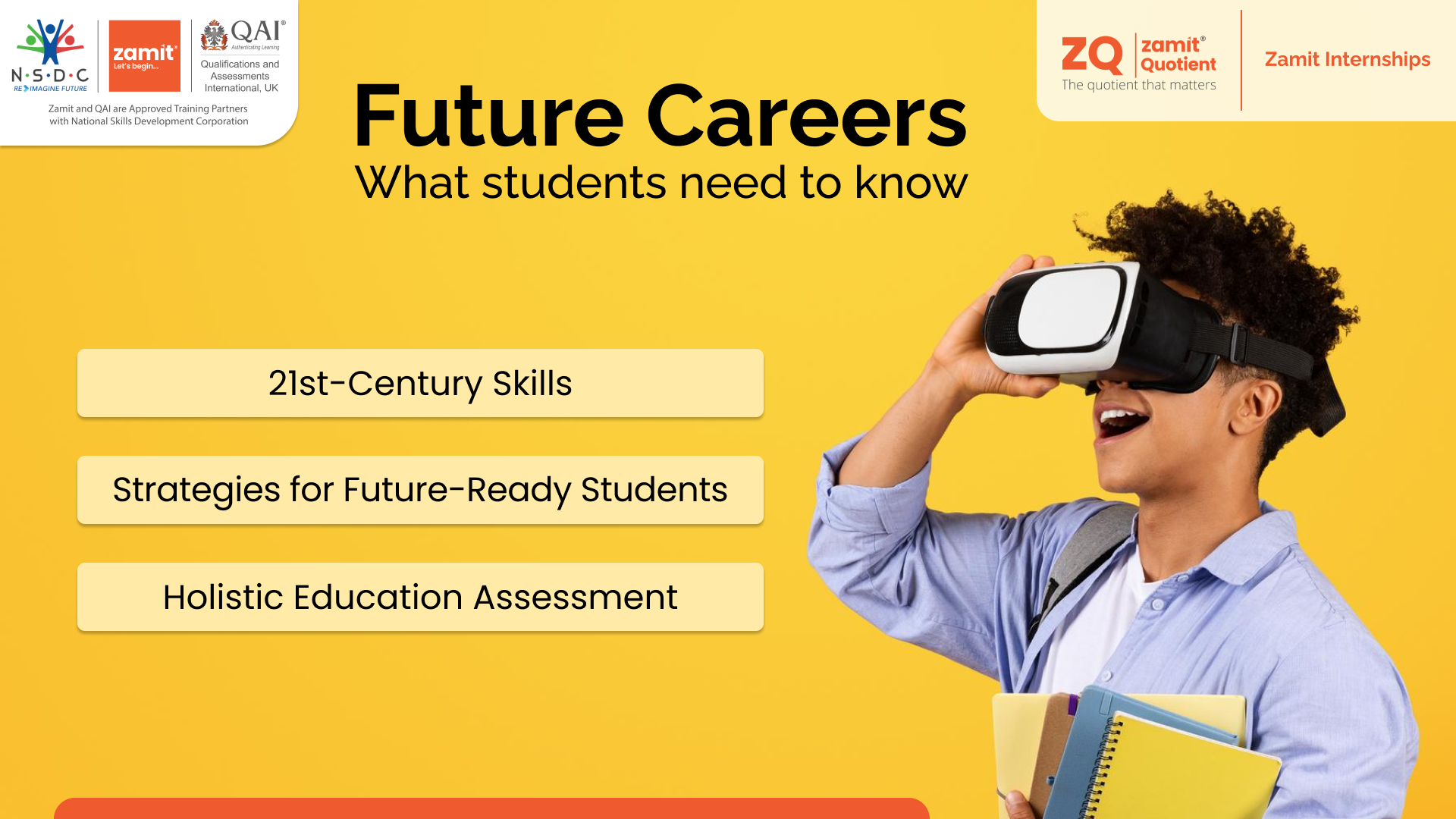
As educators, we’re witnessing an era of unprecedented change where future careers demand more than just academic knowledge—they require a blend of adaptability, innovation, and resilience. Building on our previous exploration in Preparing Students for Careers in a Changing World, this post delves into what students truly need to know about emerging job landscapes. We’ll uncover the importance of 21st-century skills for students, strategies for how to develop future-ready students, and the benefits of holistic education assessment in fostering career readiness. By prioritizing future readiness, 21st-century skills, and future skills for students, we can drive educational transformation and equip learners with the skills for success in tomorrow’s workforce.
The careers of tomorrow—spanning AI-driven roles, sustainable tech innovations, and global collaborative ventures—hinge on mastering 21st-century skills. According to the World Economic Forum’s (Future of Jobs Report 2025), by 2030, 50% of the workforce will need reskilling, with creative thinking, resilien
ce, and technological literacy topping the list of core competencies. These future skills for students aren’t abstract ideals; they’re practical tools for student development and career readiness.
Research underscores the importance of 21st-century skills for students in securing sustainable employment. A study published in Education for Sustainable Development highlights that communication and problem-solving are pivotal for graduates’ career longevity, particularly in social sciences and tech fields, enabling adaptability in volatile markets. Similarly, a comprehensive review in Frontiers in Education reveals that stakeholders across industries view these skills as essential for employability, with 21st-century competencies like collaboration and critical thinking directly correlating to job market success. By embedding the importance of 21st-century skills for students into curricula, educators can spark educational transformation, turning classrooms into hubs of adaptive learning that prepare learners for real-world challenges.
Developing future-ready students goes beyond rote memorization—it’s about cultivating skills for success through intentional student development. Key strategies include integrating adaptive learning models that personalize education to individual needs, fostering self-efficacy via early interventions, and promoting holistic growth.
Academic research provides a roadmap for how to develop future-ready students. A systematic review in the International Journal of Educational Research demonstrates that career interventions in middle school significantly enhance self-efficacy and career choices, leading to improved future development and reduced decision-making anxiety. Another study in the British Journal of Guidance & Counselling quantifies the impact of career guidance, showing measurable boosts in career readiness through validated assessments that track progress in 21st-century skills. These findings emphasize that early exposure to future skills for students—such as emotional intelligence and innovation—builds the resilience needed for career readiness.
To implement this, educators can adopt project-based adaptive learning, where students tackle interdisciplinary challenges like designing eco-friendly apps. This not only hones skills for success but also aligns with the benefits of holistic education assessment, which evaluates cognitive, social, and emotional dimensions for well-rounded growth. Platforms like Zamit excel here, offering tools for benchmarking and skill-building that support how to develop future-ready students through data-driven insights.
Holistic education assessment is a game-changer for student development, revealing gaps in future skills for students and guiding targeted interventions. Unlike traditional exams, it measures the full spectrum of 21st-century skills, from digital fluency to ethical decision-making, ensuring career readiness isn’t left to chance.
The benefits of holistic education assessment are backed by robust evidence. Research from the Journal of Career Development indicates that comprehensive assessments in early education enhance employability by 25-30%, as they promote self-awareness and adaptive learning pathways. A PMC study on career self-efficacy further shows that integrated assessments mediate parental and school supports, reducing career doubt and amplifying skills for success in diverse fields. These tools facilitate educational transformation by shifting focus from grades to competencies, helping students visualize their path in future careers.
The Zamit Quotient embodies these benefits of holistic education assessment, providing educators with actionable reports on student progress in areas like AI literacy and design thinking. Coupled with their internship programs for grades 5-12—mentored by industry experts and culminating in QAI (UK) certifications, Zamit bridges theory and practice, accelerating student development and future readiness.
No discussion of future careers is complete without highlighting resources that make preparation accessible. Zamit stands out as a leader in educational transformation, offering adaptive learning experiences tailored to build 21st-century skills. Their online internships in generative AI, data analytics, and sustainability projects immerse students in real-world scenarios, fostering career readiness through hands-on application. Zamit’s master sessions on financial literacy and AR/VR design further support how to develop future-ready students, integrating the importance of 21st-century skills for students into everyday learning.
Future careers demand proactive preparation, where the importance of 21st-century skills for students, strategies for how to develop future-ready students, and the benefits of holistic education assessment converge to create unstoppable learners. By leveraging research-backed insights and innovative platforms, educators can champion career readiness, skills for success, and adaptive learning—paving the way for an educational transformation that lasts a lifetime.
Let’s commit to this vision: empowering students not just to enter future careers, but to redefine them as innovators and leaders.
The core 21st-century skills include critical thinking, adaptability, collaboration, digital literacy, creativity, and emotional intelligence. Research in Frontiers in Educatio confirms these skills are vital for employability, with stakeholders rating them higher than technical knowledge for long-term success. [Read the full study].
Early career guidance boosts self-efficacy, reduces career indecision, and enhances overall student development by 20-30%. A systematic review in the International Journal of Educational Research shows middle school interventions lead to clearer career paths and higher resilience. [Access the review].
Holistic education assessment identifies skill gaps across cognitive and emotional domains, improving career readiness through personalized adaptive learning. The Journal of Career Development reports it increases employability metrics by fostering self-awareness and targeted growth. [View the article]