
December 8, 2025
Picture a classroom buzzing with innovation—students coding AI ethics apps, debating sustainability, and collaborating globally. Future readiness is the spark, and teachers hold the match. As the University of Waterloo and Google launch their AI-in-education partnership to boost career readiness (CBC News, 2023), it becomes clear that educators play the most important role in shaping future skills for students. By championing 21st-century skills, adaptive learning, and holistic development, teachers ignite skills for success that last a lifetime.
The importance of 21st-century skills for students—critical thinking, communication, digital literacy, and collaboration—is rising rapidly in a tech-driven world. The Waterloo–Google initiative (CBC News, 2023) highlights that AI literacy must be accessible to learners of every age, making these skills non-negotiable for future readiness.
OECD’s Education at a Glance 2023 reports that 85% of jobs by 2030 will require strong 21st-century skills, yet many students still lack structured exposure. You can bridge this gap by integrating short activities like AI ethics debates or digital storytelling to strengthen future skills for students while building confidence in a rapidly evolving landscape.
Project-based learning is one of the most effective ways to develop future skills for students. When learners design eco-friendly apps, launch virtual startups, or participate in community internships, they sharpen 21st-century skills such as teamwork, creativity, and problem-solving.
Zamit’s blog Future Careers: Empowering Students for Success encourages early exposure to internships in AI, green tech, and data analytics for grades 5–12. The World Bank’s World Development Report 2024 stresses how interdisciplinary projects prepare learners for a shifting job market and accelerate educational transformation.
Rotate team roles, assign real-world tasks, and encourage open collaboration—these practices help students build adaptability, a key component of future readiness.
The benefits of holistic education assessment go far beyond exam performance. It evaluates students on 21st-century skills like empathy, creativity, resilience, and collaboration, giving educators a deeper understanding of their growth.
The Waterloo–Google collaboration (CBC News, 2023) emphasizes accessible AI tools, aligning closely with holistic approaches for career readiness. OECD (2023) confirms that competency-based teaching strengthens adaptive learning and enhances skills for success.
Encouraging students to take ownership of their learning through self-reflections, peer feedback, and portfolios helps them track their progress in developing future skills for students.
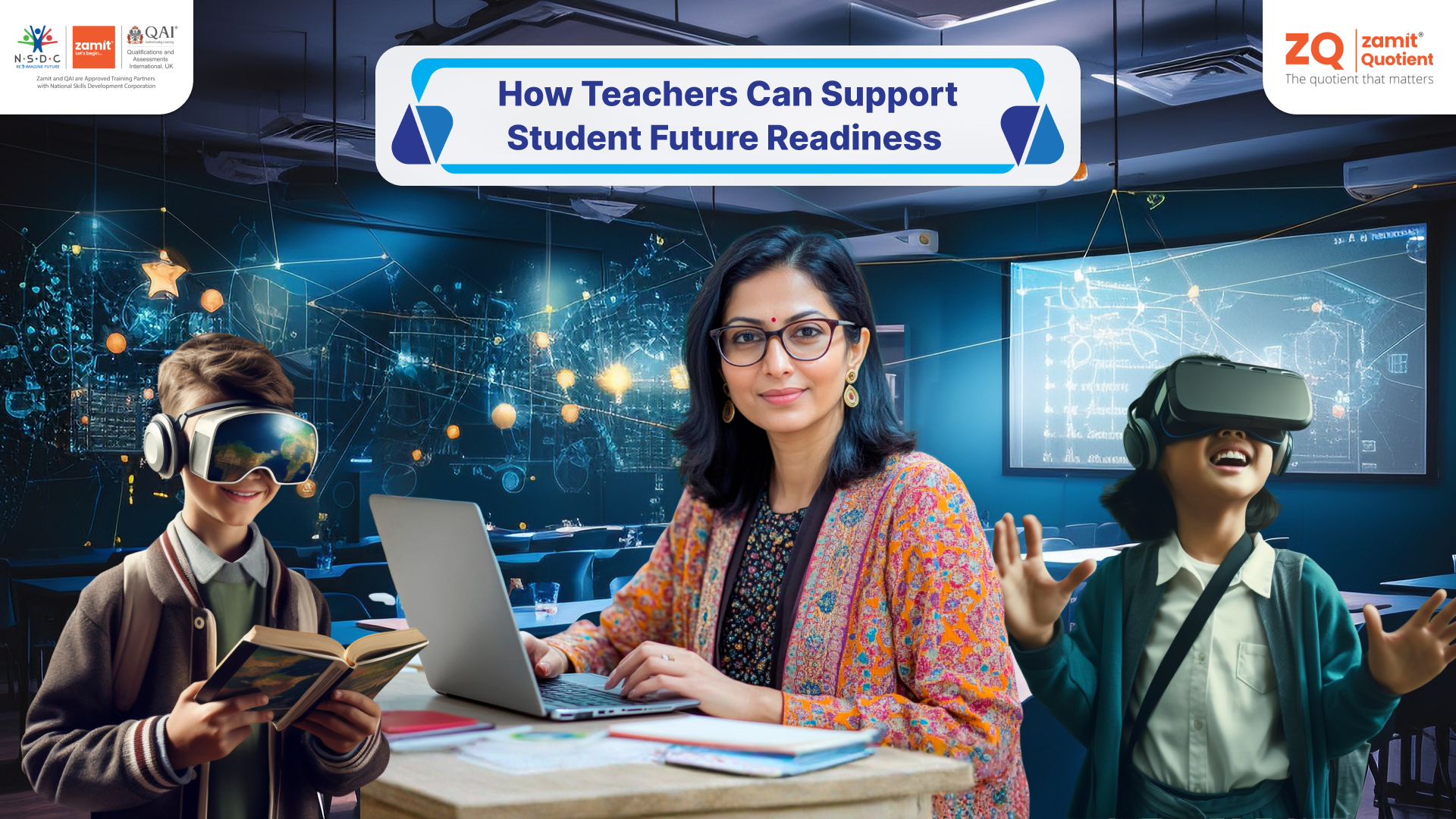
A rapidly evolving job market demands future skills for students in fields like AI ethics, cybersecurity, and green technologies. Teachers can introduce immersive tools like VR-based career exploration and AR simulations that bring learning to life.
NEP 2020 encourages integrating digital and future skills into classrooms nationwide. The World Bank (2024) links technology-rich learning environments with stronger economic resilience, making tech integration essential for educational transformation.
Try organising “future skills hackathons” where students prototype solutions to real problems—this blends creativity, enjoyment, and future readiness.
Adaptive learning personalises how students learn, enabling them to master future skills at their own pace. AI-based platforms modify challenges depending on learner needs—whether they’re coding simulations, analysing datasets, or debating ethical issues.
OECD (2023) highlights that adaptive learning increases engagement and improves student outcomes. Activities like mock job interviews allow students to apply their knowledge in real-life scenarios, accelerating student development and boosting essential skills for success.
Collaboration is one of the strongest drivers of future readiness. Encourage global issue inquiries, climate-tech challenges, and peer mentoring circles. These activities build empathy and teamwork—core 21st-century skills.
The World Bank (2024) reports that collaborative classrooms show higher career readiness and stronger innovation. Creating “skill circles” with rotating roles nurtures adaptability, leadership, and confidence.
To track future readiness effectively, use AI-driven tools like the Zamit ZQ, which analyses learners’ 21st-century skills and personal growth. These insights help educators understand individual strengths and areas for development.
The Waterloo–Google collaboration promotes responsible AI-driven analysis, and OECD (2023) confirms that skill tracking boosts future skills for students significantly.
Use rubrics, reflective journals, and real-time feedback tools to ensure a complete picture of student progress.
Teachers are the true catalysts of future readiness. By weaving 21st-century skills into every lesson, leveraging digital tools, and stimulating curiosity, educators guide the next generation towards meaningful and impactful careers.
Enroll in programmes such as Zamit’s International Teaching Excellence & Relevance Management Programme (iTERM) to stay ahead with updated knowledge and teaching strategies—empowering students to thrive in a competitive and interconnected world.
When teachers grow, students grow. And when students grow, the future grows.
References:
– CBC News. (2023). UW and Google to explore impacts of AI in education, career readiness.
– OECD (2023). Education at a Glance 2023.
– World Bank (2024). World Development Report 2024: The Middle Income Trap.
1. Why are 21st-century skills essential?
They equip students for shifting job markets, with 85% of 2030 jobs requiring them (OECD, 2023).
2. What are the benefits of holistic education assessment?
It evaluates future skills for students fully, supporting adaptive learning (OECD, 2023).
3. How to measure future readiness?
Track students 21st-century skills via ZQ analysis.