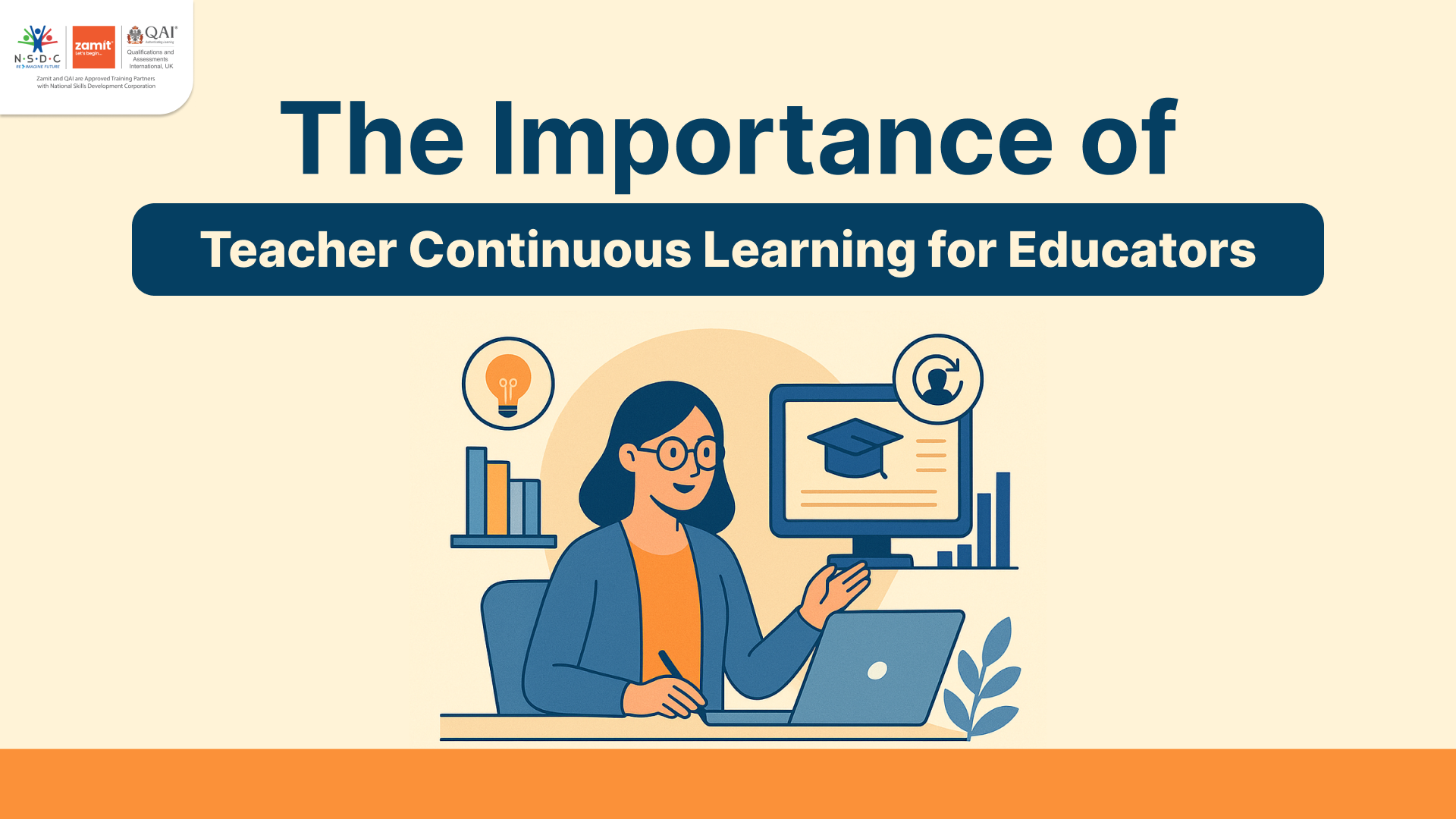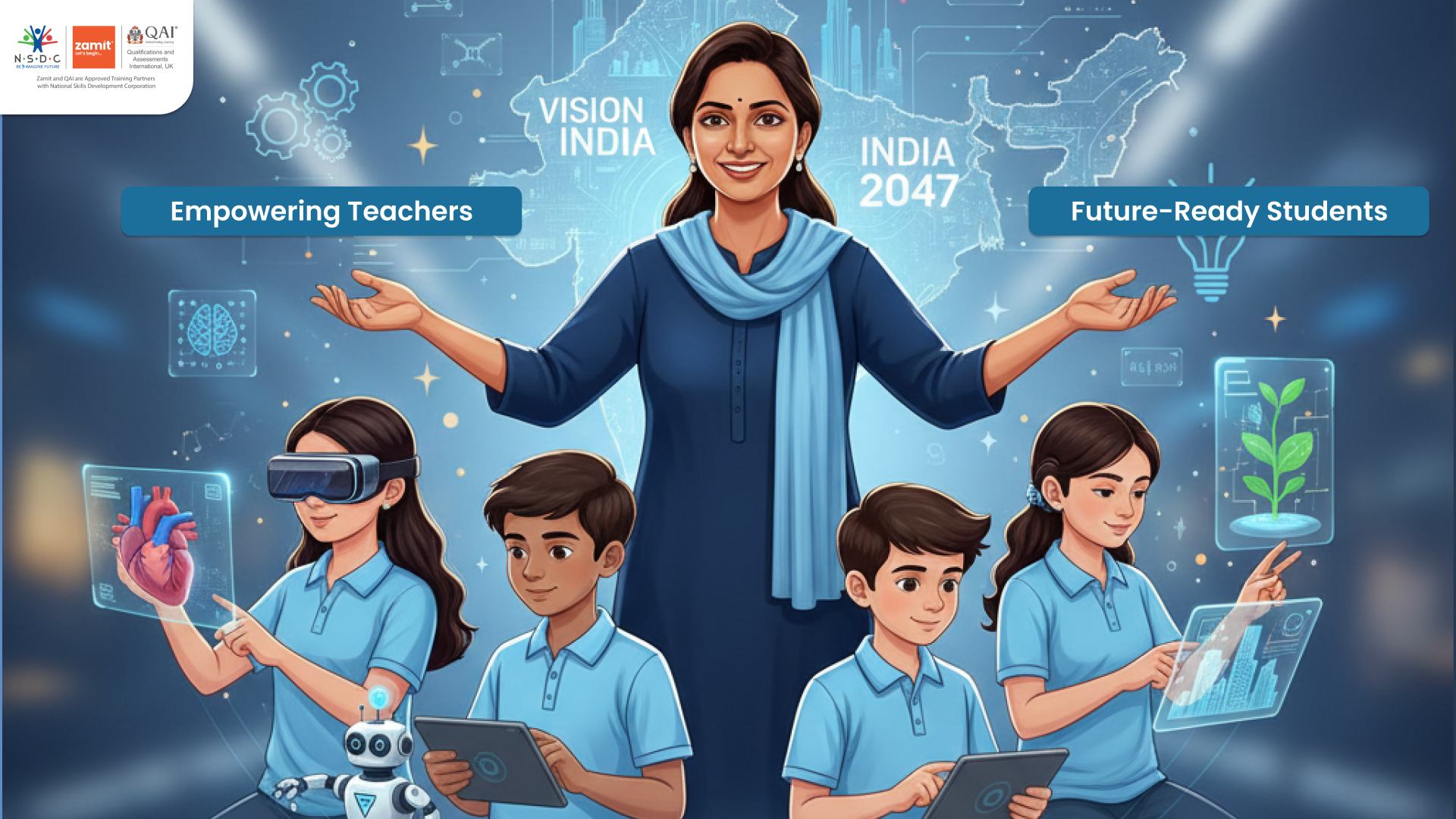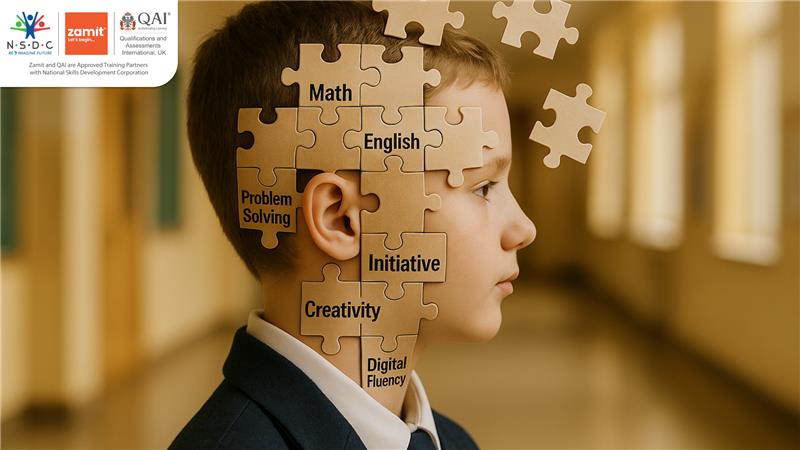
Cover image illustrating Professional Development for teachers, highlighting Continuous Teacher Learning and Future Skills for Student Success in a rapidly Shifting Job Market, with visuals representing how Future Readiness Begins in the classroom.dxc

The Importance of Teacher Continuous Learning for Educators

The Importance of Teacher Continuous Learning for Educators Today, education stands at the crossroads of tradition and transformation. To prepare future-ready students, teachers must themselves become future-ready educators—professionals who continuously learn, adapt, and grow. Platforms like Zamit are supporting this shift by helping educators strengthen their skills through structured professional development aligned with 21st-century competencies and global best practices. Future Skills for a Shifting Job Market The nature of work is changing at unprecedented speed. According to the World Economic Forum’s Future of Jobs Report (2025), over 40% of core job skills will evolve within the next five years. This change doesn’t impact industries alone—it deeply influences education. Teachers are no longer just transmitters of knowledge; they are creators of learning experiences that build essential future skills such as critical thinking, collaboration, adaptability, and digital literacy. To nurture these abilities in students, teachers must first model them. Continuous learning through professional development enables educators to stay updated on new pedagogies, technology tools, and socio-emotional learning strategies. As Professor Alison Peacock from UCL’s Institute of Education notes, “Teachers who engage in ongoing learning are better equipped to inspire curiosity and lifelong learning in their students.” Developing Future Skills for Student Success A teacher’s ability to guide students in developing 21st-century skills rests on their own learning mindset. Professional development allows educators to refine instructional strategies that emphasise creativity, problem-solving, and real-world application. Research from UCL IOE Centre for Educational Leadership consistently shows a strong link between teacher learning and improved student engagement and performance. When educators continue to learn and grow, they create classrooms that foster critical thinking, collaboration, and independent learning—core attributes of future readiness. Platforms like Zamit provide structured Continuous professional development (CPD) opportunities aligned with NEP 2020 and global frameworks such as the Common International Framework of Reference for Future Readiness (CIFR). With self-paced modules, benchmarking tools, and reflective practices, teachers can track their growth and model the skills they want students to develop. The Role of Technology in Continuous Teacher Learning In today’s digital era, learning extends well beyond the physical classroom. Teachers now have access to online platforms that personalise learning pathways and offer real-time feedback. Continuous learning increasingly involves digital literacy, data-driven instruction, and blended teaching strategies. Research from Harvard Graduate School of Education highlights that effective teacher preparation must integrate technology meaningfully—not just as a tool for delivering lessons but as a way to personalise, connect, and enrich learning experiences. Zamit’s CPD on Technological Skills reflects this approach. It supports teachers in building digital confidence through webinars, micro-courses, and peer-learning communities—ensuring educators evolve alongside their students. This form of professional development enhances both instructional quality and classroom innovation. Building Resilience and Reflective Practice Continuous learning is also about resilience and reflection. The challenges teachers face—such as managing diverse classrooms, adapting to hybrid learning, and supporting student well-being—require emotional intelligence and adaptability. Dr. Carol Dweck’s growth mindset theory captures this perfectly: educators who view challenges as opportunities model perseverance for students. Structured professional development programmes encourage teachers to evaluate their teaching, set learning goals, and celebrate progress. This cycle of reflection strengthens both confidence and competence—key pillars of future-ready education. Creating a Culture of Continuous Learning in Schools To truly prepare students for the future, schools must create environments where teacher learning is ongoing and celebrated. According to OECD’s TALIS survey, schools that prioritise professional development see higher innovation, greater teacher motivation, and improved student outcomes. Leaders can foster this culture by integrating CPD into academic planning, enabling peer mentoring, and using insights from platforms like Zamit to identify training needs. When professional development becomes a part of everyday practice, schools transform into dynamic learning organisations that evolve with the world around them. Future Readiness Begins with Teachers In a rapidly changing world, future readiness begins with educators. As architects of tomorrow’s classrooms, teachers must continuously renew their skills, methods, and mindsets. By embracing lifelong learning through modern professional development, educators remain relevant, inspired, and impactful. They not only strengthen their own professional identity but also empower students with the future skills needed to thrive in a complex global landscape. Continuous learning is not a luxury—it is the foundation of educational transformation. When teachers evolve, education evolves.

Read More
Professional Developmentdxc

Professional Development for Future-Ready Teaching 

Professional Development for Future-Ready Teaching  Professional development (PD) for educators is the key to unlocking 21st-century skills and future skills for students, driving educational transformation. With Vision India 2047 aiming for a skilled workforce and insights from Maria Teresa Tatto’s UNESCO article (Reimagining the future: developing teachers’ research and collaborative capacity, 2021), let’s explore how CPD empowers you to foster student development and career readiness.  The Importance of 21st-Century Skills for Students  The importance of 21st-century skills for students, such as critical thinking and collaboration, prepares them for a dynamic world. PD equips you to weave these skills into lessons, ensuring future readiness. Tatto’s UNESCO article (2021) emphasizes reforming teacher education for research-based teaching, aligning with NEP 2020’s 50-hour CPD mandate. By embracing PD, you model adaptive learning, fostering skills for success that ready students for career readiness.  How to Develop Future-Ready Students Through Adaptive Learning  How to develop future-ready students starts with adaptive learning—tailoring education to individual needs. PD programs train you to personalize instruction, turning gaps into opportunities. For example, a CPD on Technology-Enabled Teaching teaches AI-driven personalization, enhancing student development. Tatto (2021) highlights teacher-student collaboration, which PD supports, building 21st-century skills like problem-solving for future readiness.  Future Skills for a Shifting Job Market  The job market demands future skills for students like innovation and digital fluency for roles in AI and green tech. PD helps you integrate these into curricula, aligning with Vision India 2047’s skilled workforce goals. The CPD on Innovative Teaching Methods offers project-based strategies, as Tatto (2021) advocates for research-driven teaching. A 2023 OECD study shows such approaches boost career readiness by 20%, ensuring educational transformation.  Benefits of Holistic Education Assessment in PD  The benefits of holistic education assessment shine in PD, evaluating 21st-century skills like resilience alongside academics. The CPD on Social-Emotional Learning (SEL) in the 21st Century trains you to assess SEL, promoting student development. A 2023 study from Stanford’s Education Lab (Miller et al., 2023) found holistic assessments improve skills for success by 22%, echoing Tatto’s call for inclusive pedagogy.  Fostering Collaboration and Adaptability  Collaboration is a vital future skill for students. PD programs like Creating a Classroom Culture of Success: Strategies for Effective Management and Collaboration equip you to foster inclusive environments. Tatto’s UNESCO article (2021) stresses collaborative pedagogies, supported by a 2024 World Bank report showing a 17% rise in educational transformation through teamwork-focused teaching, enhancing career readiness.  Linking PD to Vision India 2047  Vision India 2047 envisions a skilled India by 2047, with PD as a cornerstone. The CPD on Implementing the NEP 2020 Recommendations in Classroom Teaching aligns with NEP 2020’s competency-based goals. Tatto (2021) advocates for teacher agency in policy, mirroring Vision’s focus on innovation. PD drives student development, ensuring future skills for students contribute to national progress.  Practical Steps for Educators  Start with a CPD like Innovative Assessment Methods to refine holistic education assessment. Reflect weekly on integrating 21st-century skills, and collaborate with peers for adaptive learning. A 2024 Cambridge study (Taylor, 2022) shows PD boosts teacher efficacy by 25%, enhancing skills for success. You’re the key to future readiness—take the leap!  The Power of PD  PD fuels educational transformation, turning classrooms into spaces for future readiness. Inspired by Tatto’s vision and Vision India 2047, commit to 50 hours of CPD this year. Your growth shapes students who thrive globally!  References:    – Tatto, M. T. (2021). Reimagining the future: developing teachers’ research and collaborative capacity. UNESCO.     – OECD (2023). Education at a Glance 2023. OECD Publishing. https://www.oecd.org/en/publications/education-at-a-glance-2023_1d7c46d1-en.html    – Miller, T., et al. (2023). Stanford Education Lab Report, 15(2), 101-115.    – World Bank (2024). World Development Report 2024: The Middle Income Trap. World Bank Group.     – Taylor, S. (2022). Cambridge Journal of Education, 52(4), 123-137.  FAQs  1. How does Academic Research enhance teacher’s skills?    Academic research, included in Zamit’s iTERM programme, equips teachers with evidence-based strategies, enhancing 21st-century skills teaching and educational transformation.  2. How does PD support career readiness?    PD like Technology-Enabled Teaching builds adaptive learning skills, preparing students for dynamic careers.  3. What are the benefits of holistic education assessment in PD?    It evaluates future skills for students comprehensively, boosting skills for success by 22% (Miller et al., 2023).  4. How does PD link to Vision India 2047?    PD supports Vision’s skilled workforce goal through NEP Implementation CPD, driving student development.  5. Why is PD essential for future readiness?   PD equips teachers with 21st-century skills to foster student development, aligning with NEP 2020’s mandate. 

Read More
Future-ready careersdxc

Success Stories: Students Thriving in Future-Ready Careers 

Success Stories: Students Thriving in Future-Ready Careers In today’s rapidly evolving world, future-ready careers demand more than academic excellence—they require creativity, adaptability, and emotional intelligence. As digital innovation transforms industries, students must develop 21st-century skills that prepare them for success in a dynamic global workforce. Building on educational research and policy frameworks like NEP 2020 and OECD’s Future Skills Agenda, this post explores how holistic education and adaptive learning are shaping pathways to future-ready careers around the world. The Changing Landscape of Student Success Success is no longer defined by exam results alone. The importance of 21st-century skills for students—collaboration, problem-solving, and digital fluency—is now central to every career path.The World Economic Forum’s Future of Jobs Report 2025 predicts that 60% of new roles will demand advanced cognitive and digital skills, emphasizing the urgency of developing future-ready students. Zamit’s Measure–Improve–Monitor framework empowers schools to benchmark, track, and strengthen these essential competencies, driving educational transformation and career readiness. 🔗 Explore how Zamit prepares students for future-ready careers. From Learners to Leaders: Global Success Narratives Across the world, adaptive learning and project-based education are helping students transition from learners to innovators. Indian Students Leading Future-Ready Pathways India showcases inspiring examples of holistic education assessment and skill-based learning. Delhi’s experiential STEM initiatives have led students to careers in sustainable tech and AI.The AICTE Employability Report (2024) found that graduates engaged in collaborative innovation projects are twice as likely to secure roles in emerging sectors. Institutions like IISER and Ashoka University combine ethics, research, and design thinking to produce adaptable, future-ready graduates. Zamit’s Zamit Quotient brings this opportunity to every learner—benchmarking employability skills and offering actionable insights for educators and students alike. Lessons from Holistic Education Models A Harvard Graduate School of Education (2022) study highlights that when emotional intelligence, resilience, and adaptability are assessed alongside academics, student motivation and achievement rise sharply. Benefits of holistic education assessment: Through integrated analytics, Zamit enables personalized feedback and reflective learning, ensuring each learner progresses toward future-ready careers. Empowering Educators: Building the Bridge to the Future Empowered teachers are key to developing future-ready students. Professional growth frameworks like NPST (2023) and OECD’s Teacher Learning Standards emphasize adaptive pedagogy and digital integration. Zamit’s CPD Programmes for Teachers equip educators to embed 21st-century skills, reflective practices, and emotional learning into their classrooms—preparing students to thrive in both academics and future-ready careers. A Vision for the Next Generation From young entrepreneurs designing sustainable startups in Bengaluru to Finnish innovators creating ethical AI, the message is clear: future-ready education transforms lives. By combining 21st-century skills, adaptive learning, and holistic assessment, educators can empower students to move beyond traditional learning and become leaders in future-ready careers. Zamit continues to champion this global transformation—bridging learning with employability and nurturing the next generation of skilled, confident, and future-ready citizens. References 

Read More
future careersdxc

Future Careers: What Students Need to Know 

Future Careers: What Students Need to Know  As educators, we’re witnessing an era of unprecedented change where future careers demand more than just academic knowledge—they require a blend of adaptability, innovation, and resilience. Building on our previous exploration in Preparing Students for Careers in a Changing World, this post delves into what students truly need to know about emerging job landscapes. We’ll uncover the importance of 21st-century skills for students, strategies for how to develop future-ready students, and the benefits of holistic education assessment in fostering career readiness. By prioritizing future readiness, 21st-century skills, and future skills for students, we can drive educational transformation and equip learners with the skills for success in tomorrow’s workforce.  Navigating Future Careers: The Importance of 21st-Century Skills for Students  The careers of tomorrow—spanning AI-driven roles, sustainable tech innovations, and global collaborative ventures—hinge on mastering 21st-century skills. According to the World Economic Forum’s (Future of Jobs Report 2025), by 2030, 50% of the workforce will need reskilling, with creative thinking, resilien  ce, and technological literacy topping the list of core competencies. These future skills for students aren’t abstract ideals; they’re practical tools for student development and career readiness.  Research underscores the importance of 21st-century skills for students in securing sustainable employment. A study published in Education for Sustainable Development highlights that communication and problem-solving are pivotal for graduates’ career longevity, particularly in social sciences and tech fields, enabling adaptability in volatile markets. Similarly, a comprehensive review in Frontiers in Education reveals that stakeholders across industries view these skills as essential for employability, with 21st-century competencies like collaboration and critical thinking directly correlating to job market success. By embedding the importance of 21st-century skills for students into curricula, educators can spark educational transformation, turning classrooms into hubs of adaptive learning that prepare learners for real-world challenges.  How to Develop Future-Ready Students: Strategies for Career Readiness and Skills for Success  Developing future-ready students goes beyond rote memorization—it’s about cultivating skills for success through intentional student development. Key strategies include integrating adaptive learning models that personalize education to individual needs, fostering self-efficacy via early interventions, and promoting holistic growth.  Academic research provides a roadmap for how to develop future-ready students. A systematic review in the International Journal of Educational Research demonstrates that career interventions in middle school significantly enhance self-efficacy and career choices, leading to improved future development and reduced decision-making anxiety. Another study in the British Journal of Guidance & Counselling quantifies the impact of career guidance, showing measurable boosts in career readiness through validated assessments that track progress in 21st-century skills. These findings emphasize that early exposure to future skills for students—such as emotional intelligence and innovation—builds the resilience needed for career readiness.  To implement this, educators can adopt project-based adaptive learning, where students tackle interdisciplinary challenges like designing eco-friendly apps. This not only hones skills for success but also aligns with the benefits of holistic education assessment, which evaluates cognitive, social, and emotional dimensions for well-rounded growth. Platforms like Zamit excel here, offering tools for benchmarking and skill-building that support how to develop future-ready students through data-driven insights.  The Benefits of Holistic Education Assessment in Driving Educational Transformation  Holistic education assessment is a game-changer for student development, revealing gaps in future skills for students and guiding targeted interventions. Unlike traditional exams, it measures the full spectrum of 21st-century skills, from digital fluency to ethical decision-making, ensuring career readiness isn’t left to chance.  The benefits of holistic education assessment are backed by robust evidence. Research from the Journal of Career Development indicates that comprehensive assessments in early education enhance employability by 25-30%, as they promote self-awareness and adaptive learning pathways. A PMC study on career self-efficacy further shows that integrated assessments mediate parental and school supports, reducing career doubt and amplifying skills for success in diverse fields. These tools facilitate educational transformation by shifting focus from grades to competencies, helping students visualize their path in future careers.  The Zamit Quotient embodies these benefits of holistic education assessment, providing educators with actionable reports on student progress in areas like AI literacy and design thinking. Coupled with their internship programs for grades 5-12—mentored by industry experts and culminating in QAI (UK) certifications, Zamit bridges theory and practice, accelerating student development and future readiness.  Empowering Skills for Success in Future Careers  No discussion of future careers is complete without highlighting resources that make preparation accessible. Zamit stands out as a leader in educational transformation, offering adaptive learning experiences tailored to build 21st-century skills. Their online internships in generative AI, data analytics, and sustainability projects immerse students in real-world scenarios, fostering career readiness through hands-on application. Zamit’s master sessions on financial literacy and AR/VR design further support how to develop future-ready students, integrating the importance of 21st-century skills for students into everyday learning.   Conclusion: Igniting Future Readiness in Every Student  Future careers demand proactive preparation, where the importance of 21st-century skills for students, strategies for how to develop future-ready students, and the benefits of holistic education assessment converge to create unstoppable learners. By leveraging research-backed insights and innovative platforms, educators can champion career readiness, skills for success, and adaptive learning—paving the way for an educational transformation that lasts a lifetime.  Let’s commit to this vision: empowering students not just to enter future careers, but to redefine them as innovators and leaders.  FAQs  1. What are the key 21st-century skills students need for future careers?    The core 21st-century skills include critical thinking, adaptability, collaboration, digital literacy, creativity, and emotional intelligence. Research in Frontiers in Educatio confirms these skills are vital for employability, with stakeholders rating them higher than technical knowledge for long-term success. [Read the full study]. 2. How does early career guidance impact student development?  Early career guidance boosts self-efficacy, reduces career indecision, and enhances overall student development by 20-30%. A systematic review in the International Journal of Educational Research shows middle school interventions lead to clearer career paths and higher resilience. [Access the review]. 3. What are the benefits of holistic education assessment for career readiness?    Holistic education assessment identifies skill gaps across cognitive and emotional domains, improving career readiness through personalized adaptive learning. The Journal of Career Development reports it increases employability metrics by fostering self-awareness and targeted growth. [View the article] 

Read More
future skills for studentsdxc

Preparing Students for Careers in a Changing World 

Preparing Students for Careers in a Changing World As educators, we’re not just teaching facts—we’re shaping futures. The modern workforce is evolving faster than ever, driven by technology, sustainability, and innovation. To ensure career readiness, students must develop strong future skills for students—skills that help them adapt, lead, and thrive in a rapidly changing job market. According to the World Economic Forum’s Future of Jobs Report 2025, the demand for new capabilities is transforming global employment. This blog explores how educators can nurture future readiness through 21st-century learning and help students prepare for tomorrow’s opportunities. Future Skills for Students: Navigating a Shifting Job Market The global job market is experiencing a historic shift. The Future of Jobs Report 2025 predicts a 14% increase in job creation by 2030, alongside an 8% decline in traditional roles, resulting in 78 million new opportunities. Technological innovation, digital transformation, and sustainability efforts are the key drivers of this change. For educators, the challenge is clear—students must master the future skills for students that align with this evolving world, such as digital literacy, adaptability, and critical thinking. In emerging economies like India, the emphasis on 21st-century skills is even more vital. Schools that integrate future skills for students into their curriculum build learners who are not only employable but also creative and resilient in the face of global change. Developing 21st-Century Skills for Future Readiness Building future readiness begins with cultivating core 21st-century skills—collaboration, leadership, problem-solving, and adaptability. The World Economic Forum’s Future of Jobs Report 2025 notes that nearly 40% of current core skills will change by 2030, with technology-related capabilities leading the demand. Among the fastest-growing future skills for students are: Educators can integrate these future skills for students through project-based learning, real-world challenges, and interdisciplinary collaboration. These approaches foster creativity and resilience—core elements of future readiness that prepare students to excel in uncertain environments. Career Guidance: The Bridge to Future Readiness Career guidance plays a transformative role in embedding future skills for students into education. It helps students connect classroom learning to real-world applications and empowers them to make informed choices. Research shows that early career exploration boosts self-confidence, employability, and long-term career readiness. Educators can support this by: When students receive career guidance, they move from uncertainty to clarity—building future readiness through purpose-driven learning. Integrating Future Skills into Education with Zamit Platforms like Zamit.one are redefining how schools prepare learners for the future. Zamit focuses on future readiness and 21st-century skills by offering: The Zamit Quotient (ZQ) provides schools with benchmarking tools to identify learning gaps and measure student growth. Through initiatives like iSKiL, Zamit helps educators implement experiential learning that builds adaptability and innovation. The Future of Jobs Report 2025 highlights the global skills gap as a major challenge for employers. Zamit addresses this through accessible reskilling and continuous learning pathways, helping educators and learners alike stay future-ready. Conclusion: Empowering Students with Future Skills Today Preparing students for a changing world requires intentional focus on future readiness and future skills for students. With millions of roles evolving by 2030, the time for action is now. By integrating career guidance, adopting platforms like Zamit, and aligning with global frameworks such as the World Economic Forum’s Future of Jobs Report 2025, educators can help students become adaptable, creative, and resilient. Together, we can ensure our learners are not only prepared for the future—they’re shaping it. The journey toward future readiness begins in our classrooms today.

Read More
Future Career Opportunities: Inspiring Guide for Educatorsdxc

How to Identify Future Career Opportunities: A Guide for Educators 

How to Identify Future Career Opportunities: A Guide for Educators  Preparing students for the jobs of tomorrow requires more than academic knowledge; it requires future readiness. As industries evolve and new roles emerge, educators play a vital role in equipping learners with the 21st-century skills and adaptability needed to succeed. But how can schools and teachers identify future career opportunities in a shifting global economy?  This blog explores strategies educators can use to recognize and prepare students for careers of the future. Drawing on insights from Zamit’s previous blogs  we highlight the importance of future skills for students, the value of benchmarking, and the transformative role of holistic education assessment.  Future Skills for a Shifting Job Market  The global job market is in constant flux. Automation, artificial intelligence, and the green economy are reshaping the nature of work. Careers such as data science, AI-driven healthcare, renewable energy, and digital learning design are expanding rapidly.  For educators, identifying these career pathways means keeping pace with industry trends while fostering the importance of 21st-century skills for students. Skills such as adaptability, problem-solving, and ethical decision-making are increasingly valued across sectors. By teaching students how to apply their knowledge flexibly, schools can help them transition successfully into both established and emerging careers.  Importance of 21st-Century Skills for Students  While technical expertise is essential, employers consistently seek graduates who demonstrate strong 21st-century skills. These include:  Educators who emphasize these qualities ensure students are not only technically competent but also future-ready. Incorporating project-based learning, simulations, and role-based assignments in classrooms helps students practice these skills in real-world scenarios.  How to Develop Future-Ready Students  Identifying career opportunities begins with preparing learners to embrace change. The question is: how to develop future-ready students?  These strategies help students envision diverse career pathways while developing the confidence and flexibility to pursue them.  Benefits of Holistic Education Assessment  Traditional assessments often fail to capture the full scope of a student’s potential. By focusing only on academic grades, schools risk overlooking essential skills for success such as creativity, adaptability, and teamwork.  The benefits of holistic education assessment include:  Benchmarking platforms like Zamit-QAI are designed to measure these competencies, giving educators and students actionable feedback. This ensures that learners are not only prepared for today’s classroom but also tomorrow’s workplace.  Developing Future Skills for Student Success  Future career opportunities will favour students who can demonstrate a blend of technical knowledge and transferable skills. For educators, the task is to consistently support developing future skills for student success.  Practical strategies include:  When students see these skills integrated into their daily education, they develop the confidence to explore emerging careers.  The Educator’s Role in Career Readiness  Educators are uniquely positioned to guide learners toward career readiness. By combining academic content with exposure to real-world careers, teachers can bridge the gap between school and workplace. Some practical steps include:  By modelling adaptive learning and continuous professional growth themselves, educators also inspire students to remain flexible and ambitious.  Conclusion  Identifying future career opportunities for students is less about predicting a single career path and more about preparing learners with transferable, future-ready skills. The importance of 21st-century skills for students cannot be overstated—they are the foundation for success in a dynamic job market.  Educators who embrace holistic education assessment, nurture student development, and leverage benchmarking platforms such as Zamit to ensure their learners are prepared for both today’s opportunities and tomorrow’s unknowns. By focusing on developing future skills for student success, schools can empower the next generation to thrive in careers that are as diverse as they are innovative. 

Read More
Cover image illustrating future career skills in education, highlighting 21st-century skills, holistic student development, and future-ready learning.dxc

Integrating Future Career Skills into the Curriculum

Integrating Future Career Skills into the Curriculum  The Urgency of Future-Readiness in Education  As educators we need to prepare students not just for the jobs of today, but for careers that do not yet exist. The world of work is undergoing rapid transformation, with automation, AI, and globalization reshaping industries.  Embedding future career skills into the curriculum is no longer optional—it is essential. As Zamit highlight, developing future-ready students requires moving beyond traditional academics to focus on 21st-century skills such as adaptability, collaboration, problem-solving, and growth agility.  When schools prioritize holistic education assessment and skills-based learning, they equip students with the competencies needed to thrive in a shifting job market. Blogs and articles regularly reinforce this point, urging educators to benchmark, monitor, and continuously improve the readiness of their learners.  Future Skills for a Shifting Job Market  The jobs students will pursue in the next decade are vastly different from those of their parents. Careers in cloud computing, artificial intelligence, green energy, and data ethics are emerging as high-demand domains. At the same time, transferable soft skills like communication, creativity, and emotional intelligence remain critical across industries.  Educators who embed these skills into the curriculum help students adapt to uncertainty. By designing lessons that encourage teamwork, critical thinking, and ethical decision-making, teachers foster a generation ready to navigate complexity. As Zamit points out, the ability to measure, improve, and monitor these skills provides an evidence-based framework for guiding learners toward long-term success.  Developing Future Skills for Student Success  So, how can schools systematically cultivate these competencies? The key lies in integrated learning experiences. Rather than treating future skills as add-ons, educators must weave them into everyday subjects. For instance:  The importance of 21st-century skills for students becomes clear when these competencies are embedded seamlessly into existing lessons. Educators who align with frameworks like  Common International Framework of Reference (CIFR) ensure students receive progressive, measurable exposure to the skills needed for employability and lifelong learning.  Importance of 21st-Century Skills for Students  Employers today consistently highlight a gap between academic achievement and employability. While technical knowledge can often be learned on the job, skills such as time management, problem-solving, and adaptability are harder to teach in the workplace.  Embedding these into the curriculum bridges this gap. For example:  Blogs on Zamit stress that developing future-ready students means blending academic achievement with personal growth, ensuring learners leave school with the confidence and agility to face professional challenges.  Benefits of Holistic Education Assessment  Traditional testing focuses heavily on memorization and subject knowledge, but this provides only a partial picture of a student’s readiness. A holistic education assessment approach measures not just knowledge, but also the application of skills in authentic contexts.  Platforms like Zamit offering skills assessments such as Zamit Quotient (ZQ) empower educators to benchmark student performance across essential competencies, providing valuable insights into strengths and areas for growth. This continuous cycle of measure–improve–monitor enables schools to track the development of future career skills over time.  For educators, this also means actionable data to adapt teaching practices, ensuring no student is left behind in building employability and future-readiness.  How to Develop Future-Ready Students  Developing future-ready students requires intentional strategies that extend beyond the classroom. Educators can:  By following these strategies, educators help students transition from being passive learners to active, adaptable contributors in tomorrow’s workforce.  A Call for Educational Transformation  The shift towards embedding future career skills into the curriculum is not a temporary trend; it represents a paradigm shift in education. Schools that embrace this change position themselves as leaders in preparing students for success in life, not just exams.  Zamit’s ecosystem—spanning the Zamit Quotient, continuous professional development for teachers, and student benchmarking—offers a blueprint for schools to navigate this transition effectively. By embracing these tools, educators can ensure their students are not only academically competent but also future-ready, resilient, and adaptable.  Conclusion: Empowering Students for Tomorrow  In an era of rapid change, the responsibility of educators extends beyond knowledge delivery. It is about empowering students with the skills, attitudes, and adaptability needed for success in careers of the future.  By integrating future career skills into the curriculum, adopting holistic education assessments, and leveraging frameworks like CIFR, educators can shape learners who thrive in a shifting job market. For more insights and practical strategies, visit zamit.one and explore their resource-rich blogs.  The future belongs to students who are prepared—and the time to prepare them is now. 

Read More
Students exploring future-ready careers with 21st-century skills for adaptability, creativity, and career readinessdxc

Top Future-Ready Careers for Today’s Students: A Guide for Educators 

Top Future-Ready Careers for Today’s Students: A Guide for Educators  Preparing students for future readiness has become one of the most important responsibilities of educators. Traditional career paths are no longer sufficient to guarantee success. Instead, young learners must be equipped with 21st-century skills and a strong foundation in future skills for students to navigate dynamic industries and careers that are still evolving.  This blog explores the top future-ready careers for today’s students and highlights how schools can integrate career readiness into the curriculum, fostering student development, adaptability, and lifelong learning.  Why Future Readiness Matters  The global job market is shifting at unprecedented speed. Emerging technologies, sustainability goals, and new models of work are reshaping industries. Students entering the workforce must be prepared not only for existing roles but also for careers that have yet to be fully defined.  For educators, the focus must be on more than just academic achievement. Nurturing skills for success such as problem-solving, adaptability, critical thinking, collaboration, and ethical decision-making is essential. These skills enable students to transition seamlessly into diverse industries, contributing effectively and staying resilient in the face of change.  Platforms like zamit.one support this transformation by benchmarking future skills for students, providing actionable insights into their readiness levels, and offering resources that align with global frameworks for educational transformation.  Top Future-Ready Careers  1. Artificial Intelligence and Machine Learning Specialists  AI and ML are no longer niche fields. From healthcare diagnostics to customer service chatbots, their applications span industries. Students aspiring to enter this space need strong analytical skills, logical reasoning, and an ability to learn continuously. Educators should emphasize adaptive learning, coding basics, and interdisciplinary knowledge to prepare students for these future-ready careers.  2. Data Analysts and Data Scientists  As organizations rely increasingly on data to make decisions, the demand for data-savvy professionals continues to rise. Students will benefit from exposure to statistics, mathematics, and digital tools, alongside 21st-century skills like critical thinking and ethical data use. By fostering curiosity and inquiry-based learning, educators can instil confidence in students to pursue these high-impact careers.  3. Sustainability and Green Economy Experts  With global focus shifting to climate change and sustainable development, careers in renewable energy, sustainable urban planning, and environmental policy are expanding rapidly. Students drawn to social responsibility and innovation can thrive in these fields. Educators play a key role by integrating topics like environmental science and social impact projects into the curriculum, reinforcing career readiness with a purpose.  4. Healthcare and Biotechnology Innovators  Healthcare careers are evolving beyond traditional medicine. Biotechnology, telemedicine, and personalized healthcare solutions are creating new opportunities. Students need both technical expertise and strong interpersonal skills. By developing future readiness through communication, empathy, and teamwork activities, educators can help students pursue careers that combine innovation with compassion.  5. Cybersecurity Specialists  As digital transformation accelerates, so do cyber threats. Cybersecurity is one of the fastest-growing career domains. Preparing students involves building resilience, systems thinking, and problem-solving skills. Schools can introduce coding clubs, simulated problem-solving exercises, and ethical technology discussions to cultivate these capabilities early on.  6. Creative Industries and Digital Media Professionals  Careers in digital storytelling, UX design, gaming, and content creation highlight the fusion of creativity and technology. Students with artistic inclinations can thrive when guided to build technical competencies and adaptability. Encouraging student development through projects, portfolios, and creative challenges nurtures a blend of creativity and professionalism.  7. Education Technology Specialists  The rise of digital learning has made EdTech a critical field. Roles such as instructional designers, learning experience architects, and adaptive platform developers are in demand. By introducing adaptive learning tools in classrooms, educators can both model and inspire students to pursue impactful careers in reshaping education.  The Educator’s Role in Building Career Readiness  Preparing students for these future-ready careers requires an intentional shift in teaching approaches. Educators must move beyond rote learning and foster:  By embracing educational transformation, schools can create environments where students not only acquire knowledge but also build the mindset, resilience, and agility needed for success in evolving industries.  Supporting Student Development Through Benchmarking  Benchmarking is vital for understanding where students stand on the spectrum of future readiness. Frameworks such as Zamit Quotient (ZQ)  provide educators with analytics-driven insights into individual and collective performance across 21st-century skills. This enables targeted interventions, ensuring that each student is equipped with the right skills for success.  By consistently measuring, improving, and monitoring skills, educators can ensure that students develop confidence, adaptability, and lifelong learning habits—key qualities for thriving in top careers of the future.  Conclusion  For today’s students, the journey to success lies not only in mastering academics but also in building future readiness through a blend of 21st-century skills, adaptability, and ethical awareness. Careers in AI, data, sustainability, healthcare, cybersecurity, creative industries, and EdTech represent just a few of the opportunities that await.  Educators must champion career readiness by nurturing student development, embracing adaptive learning, and leveraging platforms like Zamit-QAI to benchmark and enhance future skills for students. By doing so, they play a pivotal role in shaping a generation of learners prepared to lead, innovate, and succeed in the jobs of tomorrow. 

Read More
Cover image for blog on the role of career guidance in future readiness, highlighting 21st-century skills, student development, and future career success.dxc

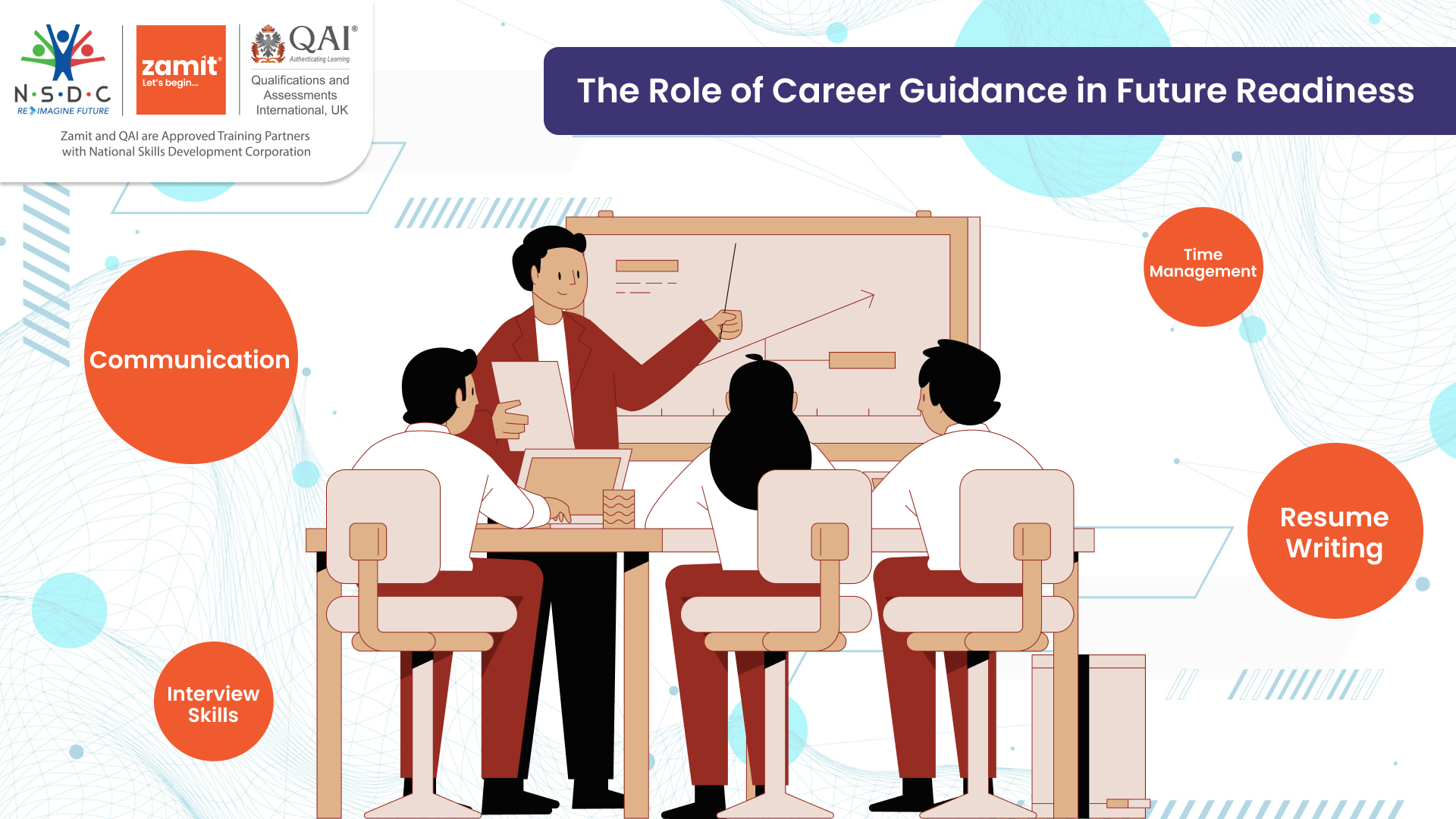
The Role of Career Guidance in Future Readiness 

The Role of Career Guidance in Future Readiness As teachers, we stand at the forefront of shaping young minds—not just for today’s classrooms but for tomorrow’s unpredictable world. Imagine a student graduating high school, armed with excellent grades but unsure about their next step in a job market evolving faster than ever. This scenario highlights the critical role of career guidance in future readiness. In an era where 21st-century skills like critical thinking, adaptability, and digital literacy are paramount, career guidance isn’t just an add-on—it’s essential. It equips learners with the future skills for students that will define their success, ensuring holistic student development and long-term career readiness. The Changing Job Market The World Economic Forum’s Future of Jobs Report 2025 outlines the seismic shifts in employment. By 2030, 170 million new jobs will emerge, while 92 million will disappear—resulting in a net gain of 78 million opportunities. This disruption impacts 22% of global jobs, emphasizing why career guidance in future readiness is crucial. Roles in AI, sustainability, and data analytics are booming, while traditional jobs in manufacturing and administration are shrinking. For teachers, this means guiding students beyond rote learning and towards creativity, problem-solving, and collaboration—key future skills for students that prepare them for tomorrow’s world. The Transformative Impact of Career Guidance Research confirms the powerful link between career guidance and student development. These findings prove that without structured career guidance in future readiness, students risk entering the workforce unprepared. Embedding career exploration into school curricula ensures that confusion is replaced with confidence and purpose. Career Guidance Builds 21st-Century Skills Future readiness is more than academic excellence—it requires 21st-century skills. According to the WEF, half of all workers will need reskilling by 2030, particularly in technology and AI. For students, this means mastering future skills such as: Through structured career guidance, students can explore interests early and build portfolios that showcase these competencies. For example, workshops on AI tools or sustainability projects directly connect education to real-world career readiness. From Theory to Real-World Application Career guidance bridges the gap between academics and application, making student development more holistic. Teachers can integrate self-assessment tools, mentorship programs, and industry insights into lessons. Research from the National Association for College Admission Counselling (NACAC) shows that guided career planning improves college persistence and job satisfaction. This approach empowers students to navigate an uncertain job market with resilience while applying future skills for students through experiential learning. Zamit: Driving Career Guidance and Future Readiness One platform leading this educational transformation is Zamit. Through its internship programs for grades 5–12, Zamit provides students with hands-on experience in fields like data analytics, market research, and generative AI. Mentored by experts such as Anuja Malaviya (Head of Data Analytics, MASH Virtual) and Abhijeet Mukherjee (former CEO, Zamit), over 500 interns have already benefited. The internships are flexible, online, and culminate in a globally recognized QAI (UK) certification—directly enhancing career readiness. Zamit also offers master sessions, mentorship, and projects in financial literacy, AR/VR design, and design thinking—embedding 21st-century skills and future skills for students into real-world learning. How Teachers Can Integrate Career Guidance Teachers can integrate career guidance in future readiness by: These steps align with research in the Journal of Career Development, which confirms that early career interventions boost employability and self-confidence. Conclusion: Career Guidance Powers Future Readiness The role of career guidance in future readiness cannot be overstated. As the job market undergoes disruption, students need 21st-century skills such as adaptability, creativity, and resilience. With platforms like Zamit, schools can integrate career readiness into learning through internships, mentorships, and benchmarking. Teachers, parents, and policymakers share the responsibility of ensuring students gain not only knowledge but also the future skills for success. By embedding career guidance into education today, we prepare students to thrive as tomorrow’s innovators, leaders, and changemakers. The journey toward future readiness starts now—because the jobs of tomorrow won’t wait.

Read More
Zamit-Blog 42-Future Skills for Students to Build Career Readinessdxc

Future Skills for Students to Build Career Readiness

Future Skills for Students to Build Career Readiness As the world of work continues to evolve at an unprecedented pace, educators face a critical responsibility: preparing students for jobs that may not even exist today. The World Economic Forum’s Future of Jobs Report 2025 has highlighted the rapid transformations in global employment trends, particularly in emerging economies like India. With automation, artificial intelligence, and digitalisation reshaping industries, students must develop future readiness and master 21st-century skills to thrive in the workforce of tomorrow.  In the context of the Indian job market, the changes are especially striking. According to reports by CMA Knowledge and Skill Reporter, Indian students will need a new mix of future skills for students by 2030 to remain competitive globally. Let’s explore what these skills are, why they matter, and how schools can embed them into their teaching to ensure holistic student development and career readiness.  The Changing Indian Job Market  India is poised to become one of the fastest-growing economies in the world, with industries such as technology, green energy, healthcare, and advanced manufacturing leading the charge. However, these industries demand a workforce that can do more than just follow instructions—they require adaptability, creativity, and resilience.  The World Economic Forum notes that by 2030, the most in-demand roles will involve problem-solving, digital literacy, and people management. Routine and repetitive tasks will be increasingly automated, meaning the jobs of tomorrow will prioritise uniquely human skills. For Indian students, this means the traditional focus on rote learning and exam performance must shift towards cultivating skills for success that align with an innovation-driven economy.  Core 21st-Century Skills for Future Readiness  1. Critical Thinking and Problem-Solving  Students must be equipped to analyse complex issues, evaluate evidence, and make informed decisions. These skills are at the heart of both career readiness and lifelong learning. In the Indian context, where businesses are expanding globally, problem-solving is essential for leadership and innovation.  2. Adaptability and Growth Mindset  The ability to embrace change is central to future readiness. With industries constantly evolving, adaptability and curiosity ensure students remain employable throughout their careers. As Skill Reporter highlights, growth agility will be a defining trait for employees in 2030.  3. Collaboration and Communication  In a globally interconnected world, teamwork across cultures and geographies is vital. Students must learn how to collaborate effectively, communicate persuasively, and contribute to collective goals. This is one of the most valuable future skills for students as remote and hybrid work become the norm.  4. Digital and Technological Literacy  From data analysis to artificial intelligence tools, technological literacy is no longer optional. Students must be comfortable with emerging technologies, not just as users but as problem-solvers who can apply them in innovative ways. This is particularly relevant to India’s booming tech and startup ecosystem.  5. Creativity and Innovation  As automation takes over routine tasks, creativity remains a distinctly human advantage. Encouraging students to think outside the box, experiment, and innovate will directly impact their career readiness and success in future-oriented industries.  6. Emotional Intelligence and Resilience  The ability to manage emotions, empathize with others, and remain resilient under pressure will be indispensable. In India’s competitive job market, emotional intelligence will help students stand out not just as skilled professionals but also as strong leaders.  Educational Transformation: From Content to Competence  For schools, these shifts signal a need for educational transformation. Traditional curricula focused on knowledge retention no longer suffice. Instead, learning models must emphasize adaptive learning, where students are actively engaged in solving real-world problems and reflecting on their experiences.  Platforms like Zamit are at the forefront of this shift, helping educators benchmark and nurture future skills for students. By integrating assessments, career guidance, and skill development tools, Zamit empowers schools to prepare students for both present and future workplace demands.  This transformation also calls for a shift in teaching practices. Educators must move beyond lecture-driven methods and embed skill-based learning into daily instruction. Project-based tasks, role-playing, and digital simulations can help students apply 21st-century skills in practical contexts, strengthening their ability to succeed in tomorrow’s workplace.  The Role of Benchmarking in Student Development  Benchmarking plays a key role in ensuring that student development aligns with global standards of future readiness. By evaluating where students currently stand and identifying skill gaps, schools can design targeted interventions that build skills for success.  Tools like the Zamit Quotient allow educators to measure career readiness holistically, covering cognitive, social, and emotional skills. Such benchmarking ensures that no student is left behind and that each one has a clear roadmap for personal and professional growth.  Preparing Students for Career Readiness in India  The future of the Indian workforce depends on how effectively schools prepare students today. Future skills for students such as adaptability, innovation, and critical thinking are not just desirable—they are essential. The reports by CMA Knowledge and Skill Reporter confirm that India must close the skill gap if it is to harness its demographic advantage.  This is where educators play a transformative role. By embedding 21st-century skills into everyday teaching and partnering with platforms like Zamit, schools can ensure that students are not only academically strong but also career-ready. In doing so, educators contribute to shaping a workforce capable of leading India into its next era of economic growth.  Conclusion: Future Readiness as a Collective Goal  The jobs of tomorrow will be shaped by technological disruptions, global collaboration, and the human ability to adapt. For Indian students, the pathway to success lies in cultivating future readiness through a focus on 21st-century skills.  By fostering student development with creativity, adaptability, and emotional intelligence at the centre, schools can ensure that every learner is prepared for the unpredictable demands of the future. Platforms like Zamit provide the necessary support to track progress, identify strengths, and guide students towards meaningful careers.  The responsibility rests with educators, parents, and policymakers to drive this educational transformation. By doing so, we can ensure that today’s learners grow into tomorrow’s innovators, leaders, and changemakers. The journey toward career readiness starts

Read More
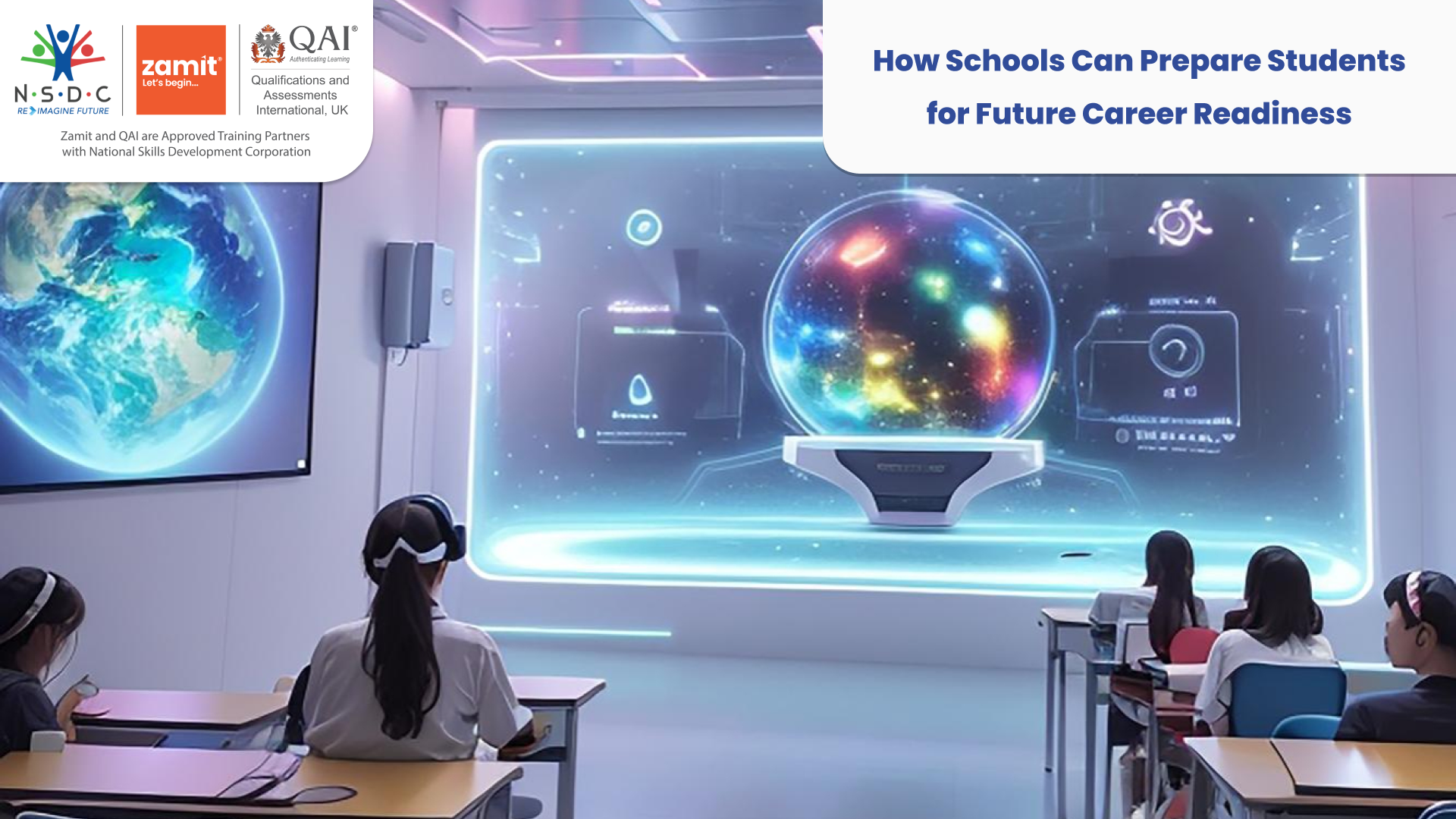
Classroom with students using futuristic digital tools and VR technology, illustrating how schools prepare students for future career readiness.dxc

How Schools Can Prepare Students for Future Career Readiness

How Schools Can Prepare Students for Future Career Readiness “Broadening digital access is expected to be the most transformative trend – both across technology-related trends and overall – with 60% of employers expecting it to transform their business by 2030”. According to the World Economic Forum’s Future of Jobs Report 2025, technology, climate change, and shifting economic priorities are rapidly reshaping the skills students will need to thrive. Automation, AI, and global interconnectedness are transforming traditional job roles while creating new ones that demand agility, creativity, and lifelong learning. For educators, this isn’t just a distant challenge—it’s a present-day responsibility. Schools must rethink how they approach student development to ensure learners leave the classroom equipped not just with academic knowledge, but with the future career readiness skills that will make them adaptable, competitive, and confident in an uncertain job market. Platforms like Zamit are leading the way in helping schools prepare students for this new reality, offering tools and benchmarking frameworks that connect educational transformation with the practical demands of future careers. The Changing Nature of Careers The Future of Jobs Report 2025 outlines two crucial realities for educators to note: In this environment, schools cannot simply prepare students for a single, fixed career path. Instead, they must equip them with transferable career readiness skills—critical thinking, problem-solving, digital literacy, emotional intelligence, and adaptability. From Academic Knowledge to Real-World Skills While academic achievement remains important, it is no longer the sole measure of a student’s future career readiness. Employers are placing equal, if not greater, value on attributes like collaboration, resilience, and creative thinking. For example: These skills are best nurtured through active, hands-on learning experiences that go beyond the textbook. Project-based learning, community initiatives, and cross-curricular challenges give students opportunities to apply their knowledge in real contexts. Integrating Adaptive Learning in Schools One of the most powerful tools schools can use to support future career readiness is adaptive learning. Adaptive learning personalises the pace and style of instruction based on each student’s needs, strengths, and areas for improvement. Why does this matter? Because the modern workplace rewards those who can learn continuously, pivot quickly, and leverage their strengths in new situations. Adaptive learning technologies—like those offered by Zamit—enable educators to identify skill gaps early and design interventions that build student development holistically. Benchmarking: A Roadmap for Career Readiness To guide educational transformation, schools need clear, measurable goals for the skills they want to develop. This is where benchmarking plays a key role. Zamit’s benchmarking tools allow educators to assess where students currently stand in terms of future career readiness. Using internationally aligned frameworks, these assessments measure essential employability skills such as: By understanding these baselines, schools can design targeted programs that build the competencies most relevant for the future of work. Embedding Career Readiness in the Curriculum Future-ready education isn’t about adding a single “career skills” course at the end of secondary school. It’s about weaving career readiness skills into the fabric of the learning journey from early years onward. Three strategies schools can adopt: Fostering a Growth Mindset for Lifelong Learning The future workforce will demand constant upskilling and reskilling. This makes lifelong learning one of the most critical aspects of future career readiness. Students must leave school understanding that education doesn’t end at graduation—it’s an ongoing process. Teachers can model this mindset by sharing their own learning experiences, embracing new teaching methods, and creating classroom environments where curiosity is valued as much as correct answers. The Role of Technology in Career Preparation Technology isn’t just a subject to be taught—it’s a tool that can enhance learning across all disciplines. From AI-powered research tools to virtual collaboration platforms, today’s students should graduate feeling comfortable navigating digital environments. However, digital skills alone are not enough. The Future of Jobs Report emphasises the rising importance of “human” skills—empathy, leadership, and cultural awareness—that cannot be automated. Schools must strike a balance between developing technological proficiency and cultivating interpersonal competencies. Preparing Students for Careers That Don’t Exist Yet Perhaps the most challenging aspect of future career readiness is preparing learners for jobs that have not yet been created. This requires focusing less on memorising facts and more on building flexible thinking, creative problem-solving, and the confidence to navigate ambiguity. A future-ready student should be able to: Final Thoughts The careers of tomorrow will demand more than just technical expertise—they will require adaptable, self-motivated individuals who can combine knowledge with creativity and empathy. Schools that embrace educational transformation, integrate adaptive learning, and use data-driven tools like Zamit will be best positioned to prepare students for success in this evolving landscape. By aligning education with insights from the Future of Jobs Report 2025 and embedding future career readiness into every aspect of learning, educators can ensure that their students don’t just survive the future—they shape it.

Read More
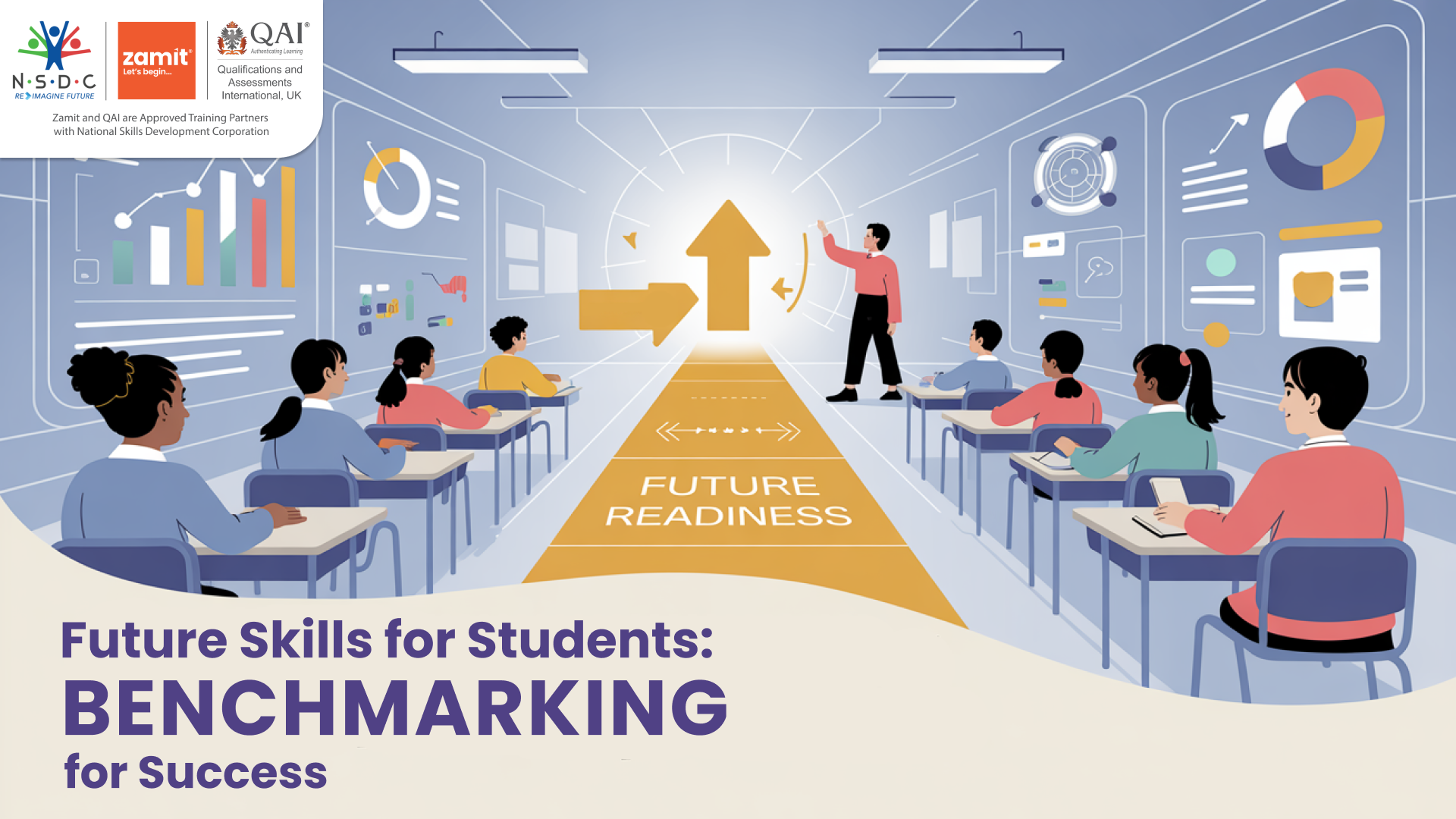
"Students and teachers engaged in collaborative learning, representing benchmarking in education to develop future skills for students."dxc

Future Skills for Students: Benchmarking for Success

Future Skills for Students: Benchmarking for Success  Are you ready to elevate your teaching game and prepare students for a dynamic future? Benchmarking is a powerful strategy for continuous improvement, ensuring future readiness and the development of 21st-century skills in your classrooms. Let’s dive into how this approach can transform your school and empower future skills for students in a world of constant change.  What is Benchmarking and Why It Matters  Benchmarking involves comparing your school’s practices against top performers to identify gaps and opportunities. It’s not just about numbers—it’s about fostering future readiness by aligning teaching with future skills for a shifting job market. Studies like those by Watson (2020) in the Journal of Educational Leadership show that schools using benchmarking improve student outcomes by 15%, making it a vital tool for developing future skills for student success. Let’s explore how you can make it work for you!  Linking Benchmarking to Future Readiness  Future readiness is at the heart of modern education, and benchmarking helps you get there. By analysing how leading schools teach 21st-century skills like critical thinking and digital literacy, you can adapt strategies to meet these demands. A 2022 study by Smith and Lee in Educational Policy Analysis found that benchmarked schools were 20% more effective in preparing students for future careers. This interactive process invites you to reflect: how can your curriculum evolve?  Benchmarking as a Tool for 21st-Century Skills  Teaching 21st-century skills requires more than traditional methods—benchmarking provides the roadmap. It allows you to compare your approach to global leaders, focusing on skills like collaboration and creativity, which are essential future skills for students. According to OECD’s Education at a Glance 2023, schools that benchmark against international standards see a 25% increase in student engagement. Why not join this movement on Zamit and see the difference?  Developing Future Skills for Student Success  Developing future skills for student success is a shared goal, and benchmarking supports this beautifully. By studying best practices, you can introduce project-based learning or tech integration, aligning with future skills for a shifting job market. Research by Johnson (2021) in Innovative Education Practices highlights that benchmarked schools improve problem-solving skills by 18%. Let’s challenge ourselves to adopt these proven methods!  Continuous Improvement Through Data-Driven Insights  Benchmarking thrives on data, turning insights into action for continuous improvement. Students can take the ZQ analysis and teachers can understand their current competencies by completing TERM analysis. With this data, schools can assess their performance in 21st-century skills development and adjust teaching strategies accordingly. A case study by Brown et al. (2023) in School Effectiveness Journal showed that data-driven benchmarking led to a 30% rise in student readiness for future jobs. How exciting is it to use data to shape your students’ futures?  Overcoming Challenges with Benchmarking  Implementing benchmarking can feel daunting, but the rewards are worth it. You might face time constraints or resistance to change, yet with collaboration, these hurdles become opportunities. Taylor and Green (2022) in Educational Management Review suggest starting small—compare one area, like future skills for students, and scale up. Ready to take that first step together? Partner with Zamit!  Fostering a Culture of Continuous Learning  Benchmarking fosters a culture of continuous learning, essential for future readiness. It encourages you and your team to regularly update 21st-century skills teaching methods based on global trends. The UNESCO Global Education Monitoring Report 2024 notes that schools with continuous benchmarking improve teacher efficacy by 22%. Isn’t it inspiring to build a learning community?  Real-World Examples of Benchmarking Success  Let’s look at some wins! A school in Finland, benchmarked against Singapore’s model, boosted future skills for students like innovation by 35%, per a 2023 EU Education Report. Another U.S. district used benchmarking to enhance developing future skills for student success, seeing a 15% increase in college readiness. These examples show benchmarking’ s power—can your school be next?  Practical Steps to Start Benchmarking  Getting started is easier than you think. Identify a focus area, like 21st-century skills, and compare it with a top-performing school. Use tools like the Zamit Quotient frameworks to guide your process. Engage your team in this journey—your input makes it fun and effective!  The Long-Term Impact on Educational Outcomes  Benchmarking drives long-term success in future readiness. It ensures your students are equipped with future skills for a shifting job market, ready to thrive in diverse careers. As Davis (2023) notes in Journal of Curriculum Studies, sustained benchmarking improves student retention by 20%. Let’s commit to this path together!  Your Role as an Educator  You’re the catalyst for this change! By embracing benchmarking, you’ll enhance 21st-century skills and future skills for students. Share your experiences with colleagues—let’s build a network of innovative educators. How will you start your benchmarking journey today?  Helpful FAQs  1. What is benchmarking in education? Benchmarking is comparing your school’s practices with top performers to improve future readiness and 21st-century skills.  2. How does benchmarking help students? It enhances future skills for students by aligning teaching with future skills for a shifting job market.  3. What challenges might I face with benchmarking? Time constraints and resistance to change are common, but starting small can overcome these hurdles. Ensuring standardisation could be a challenge.  4. How often should we benchmark? Annually or semi-annually to ensure continuous improvement in developing future skills for student success.  5. Where can I find benchmarking resources? Check Zamit analysis tools for both students and teachers, or collaborate with other schools for insights. 

Read More
dxc

Educational Benchmarking: Best Practices 

Educational Benchmarking: Best Practices As the demands of the modern workplace evolve, schools are expected to do more than deliver academic content. They must equip students with the future skills needed to succeed in complex, unpredictable environments. But what does benchmarking really mean for schools? And how can it be done effectively?  Let’s explore the best practices in educational benchmarking and how innovative schools are using this approach to unlock student potential.  What is Educational Benchmarking?  Benchmarking in education is the practice of comparing your school’s processes, outcomes, or student competencies against a set of well-defined standards or successful models. It helps school leaders answer key questions:  The goal is not competition, but continuous improvement.  Why Benchmarking Matters for Future Readiness  Future readiness isn’t just about academic success. It’s about preparing students to thrive in a world shaped by automation, artificial intelligence, globalisation, and complex challenges.  According to the World Economic Forum, the most in-demand skills by 2030 will include critical thinking, adaptability, collaboration, creativity, and emotional intelligence. These are not taught by traditional methods alone—they require a holistic education framework and targeted development strategies.  This is where benchmarking becomes essential. Schools that track progress against future-focused indicators are far more likely to produce graduates who are resilient, resourceful, and ready for what comes next.  Zamit: Benchmarking Future Skills in Action  Zamit, a leading SkillTech company, has been at the forefront of helping schools benchmark their readiness for the future. Through the Zamit Future Readiness Index (ZQ), schools get detailed, data-driven insights into how their students are performing across Nine Dimensions of Future Readiness—from analytical abilities to universal awareness.  These tools are aligned with global education frameworks and support both self-assessment and expert evaluations. The process is designed to be easy, insightful, and action-oriented.  Best Practices for Educational Benchmarking  To ensure benchmarking leads to real impact, schools should follow a few key best practices:  1. Set Clear Objectives Aligned to Future-Readiness Goals  Begin with a clear vision: What future skills do you want your students to develop? Align your benchmarking goals with competencies like critical thinking, self-motivation, collaboration, and digital literacy. Zamit’s tools help schools align these objectives with structured benchmarks.  2. Use Both Internal and External Benchmarks  Combine internal comparisons (year-on-year student progress) with external benchmarks (against national or global standards). For instance, schools using Zamit get to compare student performance with thousands of others across the country—providing valuable context.  3. Benchmark More Than Academics  21st-century success requires more than test scores. Include life skills, communication abilities, and growth mindsets in your evaluation. Zamit’s ZQ reports allow you to track these areas and integrate feedback into your teaching approach.  4. Engage Teachers and Students in the Process  Benchmarking works best when it becomes part of the school culture. Encourage teachers to analyse the results, reflect on practices, and co-create improvement plans. Involve students through self-assessment tools that promote ownership of learning and future readiness.  5. Act on the Data – Don’t Just Collect It  Collecting benchmarking data is only the first step. Use it to inform decisions, design targeted interventions, and track the effectiveness of skill development programmes. For example, a school that noticed low scores in adaptability initiated weekly peer challenges to build resilience—and saw measurable improvements within months.  Building a Culture of Continuous Improvement  Educational benchmarking is not a one-time event—it’s a mindset. Schools that embrace it consistently raise their own standards and remain agile in a changing world. More importantly, they model for students what it means to adapt, grow, and stay future-ready.  As educators, your role is pivotal. By choosing the right benchmarking tools and acting on insights, you help your students build the skills and confidence they need—not just for exams, but for life.  Get Started with Zamit  Ready to benchmark your school’s journey towards future readiness?  Zamit makes it easy. Whether you’re just beginning or refining your current approach, explore practical resources and real stories from schools like yours at Zamit Blogs.  With Zamit, you’re not just measuring where you are—you’re leading where education is going.  Let’s shape the future. One benchmark at a time. #FutureReadiness #21stCenturySkills #FutureSkillsForStudents 

Read More
Students and teacher using laptops during a classroom activity, demonstrating digital learning and benchmarking in school with Zamit’s assessment tools.dxc

How to Start Benchmarking in School for Future-Ready Education

How to Start Benchmarking in School: A Guide for Future-Ready Educators  In a world where educational outcomes are constantly evolving, benchmarking in school is no longer optional — it’s essential. It gives schools a clear view of where they stand, what to improve, and how to future-proof their learners. But how exactly can schools begin this journey?  This blog breaks down the steps to get started with benchmarking and shows how platforms like Zamit.one make the process insightful, practical, and aligned with 21st-century goals.  Understanding the Importance of Benchmarking in Education  Benchmarking in education is the process of comparing your school’s practices and performance with standards, frameworks, or best-in-class institutions. It helps identify gaps, discover what works, and tailor improvement strategies for both students and staff.  Unlike traditional testing, benchmarking offers a broader, more meaningful view. As highlighted in Zamit’s recent blog on Benchmarking in Education, it fosters a culture of continuous improvement aligned with today’s shifting global job market.  Why Schools Must Prioritize 21st-Century Skills for Students  Traditional academic success is no longer a strong indicator of employability or real-world preparedness. Today, schools must ensure students develop key 21st-century skills — including adaptability, collaboration, digital literacy, and emotional intelligence.  Benchmarking enables educators to track these soft and transferable skills alongside academic outcomes. Tools like the Zamit Quotient (ZQ) offer a structured way to measure these dimensions and support long-term student development.  Step 1: Identify What You Want to Benchmark  Start by defining the purpose. Are you benchmarking student performance, teacher development, school-wide outcomes, or future-readiness? Most schools benefit from a blended approach that combines academic benchmarks with future-readiness indicators.  Platforms like Zamit help schools assess areas such as skills for success, adaptive learning readiness, and career preparedness — aligning closely with the needs of a fast-changing world.  Step 2: Choose the Right Framework and Tools  Once goals are set, choose a framework that reflects modern educational values. Zamit uses the Common International Framework of Reference (CIFR), which supports global benchmarking across both traditional academics and holistic education metrics.  This ensures your school’s progress is measured not just locally, but globally — preparing students to succeed in diverse and dynamic environments.  Developing Future-Ready Students Through Smart Assessment  Future-readiness doesn’t happen by chance. It requires continuous monitoring and improvement. Zamit’s AI-powered tools evaluate students on areas like curiosity, problem-solving, time management, and adaptability — all crucial for thriving in future careers.  These insights allow educators to personalise learning and provide timely interventions, building both competence and confidence among learners.  Step 3: Gather Baseline Data and Involve All Stakeholders  Once you have your framework, begin by collecting data. This can include academic scores, behavioural observations, feedback from parents, and skill-based assessments.  The key is inclusivity. Engage students, teachers, and parents in the process. Zamit’s platform makes this seamless through dashboards and real-time reports, helping everyone take ownership of student development and outcomes.  Benefits of Holistic Education Assessment and Benchmarking  Benchmarking helps schools understand the whole child, not just the grades on paper. It uncovers strengths, learning gaps, and potential areas of growth — academically, socially, and emotionally.  It also helps schools align better with national education policies and global standards, as explored in Zamit’s blog on Educational Transformation and Benchmarking.  Step 4: Analyse the Data and Set Improvement Goals  Benchmarking is only useful if it drives action. After collecting the data, analyse patterns and trends. Are students struggling with time management? Is a particular grade lagging behind in collaboration skills?  Use these insights to set SMART (Specific, Measurable, Achievable, Relevant, Time-bound) goals. Zamit’s benchmark reports automatically highlight areas needing attention and suggest CPD (Continuous Professional Development) strategies for educators.  Step 5: Take Action and Monitor Progress  With goals in place, it’s time to implement changes. This could include skill-based learning modules, improved teacher training, or redesigning assessments to be more adaptive.  The Zamit platform supports regular re-evaluation, so you can monitor growth over time. This ensures that benchmarking becomes an ongoing process rather than a one-time audit.  Empowering Educators with Data-Driven Insights  Teachers play a pivotal role in shaping future-ready students. Benchmarking gives them the insights to guide learners more effectively, align classroom strategies with future demands, and improve instructional quality.  Using Zamit’s CIFR-aligned reports, educators can refine their teaching plans to ensure each learner progresses at their own pace — a key aspect of adaptive learning.  Final Thoughts: Starting Small, Thinking Big  Benchmarking can seem complex at first, but starting small — even with just one grade or skill set — can spark a larger cultural shift in your school. With the right tools and mindset, you’ll begin to see tangible improvements in student outcomes, engagement, and school-wide performance.  Zamit supports schools at every stage of this journey — from benchmarking and diagnostics to training and transformation. Visit Zamit.one to explore how your school can get started today.  FAQs  Q1: Is benchmarking only for high-performing schools? No. Benchmarking benefits every school, regardless of current performance. It provides direction and growth pathways for all learners and educators.  Q2: How frequently should benchmarking be done? Ideally, schools should benchmark at least twice a year. Zamit recommends term-wise diagnostics followed by targeted improvement plans.  Q3: What makes Zamit’s benchmarking approach unique? Zamit integrates 21st-century skills, AI analytics, and global education standards like CIFR to provide a more comprehensive and future-ready benchmarking system.  Q4: Do teachers need special training to use benchmarking tools? Not at all. Zamit offers orientation and support to make the process easy and meaningful for all staff members.  Q5: How can benchmarking help students? Benchmarking identifies student strengths and gaps early, supports personalised growth, and helps develop future-ready competencies aligned with emerging global opportunities. 

Read More
Students collaborating in a digital classroom setting, analyzing data charts and graphs on tablets and laptops, representing the concept of benchmarking in education, with logos of NSDC, Zamit, and QAI indicating certified training partnerships.dxc

The Importance of Benchmarking in Education 

The Importance of Benchmarking in Education  “Without data, you’re just another person with an opinion.” – W. Edwards Deming  Education must be more than just the transfer of knowledge—it must be a powerful catalyst for career readiness and lifelong success. Benchmarking in education plays a pivotal role in ensuring that students, schools, and systems are on track to meet the challenges of the 21st century. By setting measurable goals and comparing progress against global standards, benchmarking enables a clearer understanding of what constitutes meaningful student development and academic achievement.  The World Economic Forum consistently highlights the mismatch between what schools teach and the skills employers require. The job market is rapidly transforming, driven by automation, artificial intelligence, and the digitisation of industries. Students can no longer rely solely on subject mastery; they must develop skills for success like critical thinking, adaptability, collaboration, and creativity. Benchmarking helps identify these gaps and drive educational transformation by aligning learning outcomes with real-world demands.  Benchmarking also fosters adaptive learning, helping institutions personalise education to student needs. By using international frameworks like the Common International Framework of Reference (CIFR), educators can assess student competencies across a range of skills and track progress through a structured, evidence-based model. This process supports the move away from a one-size-fits-all approach and embraces a more inclusive, differentiated educational environment.  A powerful example of benchmarking in action is Zamit’s ZQ Benchmarking Programme, which measures student preparedness for the future through its proprietary Zamit Quotient. Available on zamit.one, this framework assesses students across nine future readiness parameters, linked closely to skills identified by the Economic Forum as essential for the jobs of tomorrow. These include emotional resilience, digital literacy, communication, leadership, and problem-solving—capabilities that go beyond the classroom and extend into all areas of life and work.  Effective benchmarking doesn’t just track student learning—it informs teacher development, curriculum design, and school leadership. Schools that regularly benchmark themselves against global standards can identify areas of excellence and improvement, create data-driven strategies, and set clear goals for educational transformation. This encourages accountability and transparency, both of which are essential for systemic improvement.  The global economy is increasingly interconnected, and so must be our approach to education. Countries that succeed in education reform often reference international benchmarks such as PISA, TIMSS, and CIFR. These tools allow policymakers to understand how their students perform in a global context and implement reforms accordingly. But benchmarking is not just for governments—it empowers schools and educators to take ownership of their own student development and drive continuous improvement.  Moreover, benchmarking plays a critical role in building career readiness. Students equipped with benchmarked skills can demonstrate their competence and confidence in real-world scenarios. This becomes crucial as employers place growing emphasis on soft skills, adaptability, and independent learning—qualities best developed through a well-benchmarked and future-focused curriculum.  Through platforms like Zamit, schools can embed adaptive learning and benchmarking into their everyday teaching. Tools such as continuous assessment, skill-based reporting, and AI-driven feedback make it possible to personalise learning journeys and respond dynamically to student progress. This leads to better engagement, motivation, and outcomes, particularly for students who may fall outside traditional academic norms.  Importantly, benchmarking encourages equity in education. By providing objective measures, it highlights disparities in learning and access, pushing for interventions where they are needed most. This ensures that all learners—not just high achievers—have the opportunity to build the skills for success and become contributors to the global workforce.  As the future of work continues to change, education systems must be agile and responsive. Benchmarking is not a luxury—it is a necessity. It provides the insights and tools needed to nurture students who are curious, capable, and ready to thrive in an unpredictable world. It is through this lens that benchmarking in education emerges as a cornerstone of future readiness and long-term prosperity.  FAQs  Q1: What is benchmarking in education? A: Benchmarking in education refers to the process of comparing student performance, school practices, or curriculum standards to established national or international norms to drive improvement and innovation.  Q2: Why is benchmarking important for student development? A: It helps track progress, identify learning gaps, and personalise instruction to ensure each student is developing the necessary academic and life skills for long-term success.  Q3: How does Zamit support benchmarking? A: Zamit offers tools like the Zamit Quotient a standardised benchmarking programme, to assess student readiness for the future, aligning with global frameworks (CIFR) and the needs of a changing job market.  Q4: What is CIFR and how does it relate to benchmarking? A: The Common International Framework of Reference (CIFR) is a global standard used to assess competencies in areas such as digital literacy, analytical abilities, and communication skills, making it ideal for structured benchmarking.  Q5: How does benchmarking improve career readiness? A: By aligning education with industry standards and skill requirements, benchmarking ensures students are prepared to meet workplace expectations and succeed in diverse careers.  Q6: Can benchmarking help with adaptive learning? A: Yes, benchmarking identifies individual strengths and weaknesses, enabling tailored learning experiences that adapt to each student’s pace, needs, and goals.  Q7: Is benchmarking only for high-performing schools? A: No. Benchmarking is a valuable tool for all schools, helping improve learning outcomes, promote equity, and guide targeted intervention regardless of the starting point. 

Read More
Group of school girls using a tablet in classroom with Zamit, QAI, and NSDC logos, representing schools excelling with the Zamit Quotient for educational successdxc

Case Studies Schools Excelling with the Zamit Quotient

Case Studies Schools Excelling with the Zamit Quotient In today’s fast-evolving world, preparing students for an unpredictable future is a growing challenge. Schools that are committed to building future readiness are turning to frameworks like the Zamit Quotient (ZQ) to drive meaningful change. The Zamit Quotient is not just an assessment tool; it’s a roadmap for cultivating 21st-century skills. Schools using ZQ have reported improvements in adaptability, communication, and problem-solving among their students—all critical future skills for students facing an ever-changing job market.  Developing Future Skills for Student Success  Starlight International School in Faridabad implemented the Zamit Quotient across Grades 6 to 12. The school introduced micro-modules based on student ZQ reports, targeting collaboration, digital literacy, and learning agility.  Within a year, the school noted a measurable improvement in student-led projects and peer learning. Teachers observed that students were more willing to take initiative, solve real-world problems, and reflect on their learning journeys—signs of growing future readiness.  Building 21st-Century Skills through Personalised Insights  At Greenfield Academy in Delhi NCR, the leadership team used ZQ to inform curriculum planning. By analysing ZQ profiles, educators integrated project-based learning and inquiry tasks aligned with individual student needs.  The school saw a 30% rise in student engagement and a noticeable boost in creative thinking and time management. The Zamit Quotient helped teachers shift from content delivery to skills facilitation, a core requirement for 21st-century education.  How Zamit Quotient Enhances Future Readiness  Future readiness isn’t a one-time achievement; it’s a continuous process. The Zamit Quotient supports this by offering regular insights across key areas such as curiosity, resilience, collaboration, and adaptability.  At Sunrise Public School in Dwarka, ZQ was used to track improvement across two terms. The feedback loop empowered both students and teachers to adapt quickly, ensuring that future skills for students remained central to classroom strategies.  Future-Ready Teaching Methods Inspired by ZQ  Educators at Hilltop School in Dehradun took the insights from ZQ reports and revamped their teaching methodologies. Lessons became more inquiry-driven, student voices were amplified, and the classroom culture shifted towards self-motivation and critical thinking.  This transformation aligned with NEP 2020 recommendations and made future readiness a visible and measurable outcome of day-to-day learning.  Student-Centric Innovation Powered by 21st-Century Skills  Bright Horizons High School in Gurgaon combined Zamit Quotient analysis with their innovation lab sessions. They launched interdisciplinary challenges that required students to collaborate, ideate, and pitch solutions to real-life problems.  The impact? Students demonstrated increased confidence, growth, agility, and curiosity—hallmarks of 21st-century skills that directly correlate with future workplace demands.  Strengthening Educator Practices for Future Readiness  The Zamit Quotient isn’t only a student tool. At Rising Scholars School in Ludhiana, teachers used their own analysis of Teaching Excellence and Relevance Management (TERM) profiles for professional development. The school tailored CPD programmes to address growth areas like digital pedagogy, competency based education, and emotional intelligence.  This dual investment in teacher and student future readiness created a cohesive, forward-looking learning environment.  Future Skills for Students in Real-World Contexts  Real-world relevance is a priority for modern learners. Using ZQ data, a School in Ajmer restructured club activities and excursions to better align with student strengths and improvement areas.  From communication clubs to sustainability workshops, students applied their skills in authentic contexts. This practical engagement not only improved performance but also deepened their understanding of future skills for students in action.  Closing the Readiness Gap with Data-Driven Decisions  What sets high-performing schools apart is not just what they teach, but how they evolve. The Zamit Quotient allows schools to monitor growth, set targets, and align academic goals with future readiness indicators.  Whether it’s revising lesson plans, planning cross-curricular projects, or rethinking assessments, schools that embed ZQ insights are better positioned to bridge the gap between schooling and real-world success.  Conclusion: Leading the Way with Future Readiness  As the demands of the job market shift, schools must embrace innovative, data-driven strategies to prepare their learners. These case studies show that the Zamit Quotient equips schools to build future readiness and empower students with the 21st-century skills they truly need.  Schools investing in ZQ aren’t just improving grades; they’re nurturing curious, adaptable, and future-ready individuals. And in today’s world, that’s the ultimate measure of educational success.  *Names of schools have been changed for privacy reasons 

Read More
Teacher guiding students on laptops in a classroom, showcasing the Zamit Quotient in action and its positive impact on Educational Outcomes.dxc

The Impact of the Zamit Quotient on Educational Outcomes 

The Impact of the Zamit Quotient on Educational Outcomes Educators, are you ready to transform your teaching approach? The Zamit Quotient (ZQ) is making waves in education by focusing on future readiness and continuous learning. This AI-driven tool measures 21st-century skills, offering a roadmap for how to develop future-ready students. Let’s explore how ZQ impacts educational outcomes and why it’s a must-have for modern schools.  Why ZQ is a Game-Changer for Schools  ZQ, developed by Zamit, assesses over 70 skills across nine dimensions—like entrepreneurial and analytical skills, and digital literacy. It goes beyond traditional grades, emphasising the importance of 21st-century skills for students. A blog on Zamit, The Future of Continuous Learning, notes that ZQ aligns with the need for lifelong learning in a VUCA world. By focusing on future readiness, ZQ ensures students are prepared for evolving careers.  Enhancing Student Outcomes Through Holistic Assessment  One of ZQ’s biggest strengths is its benefits of holistic education assessment. It provides a 360-degree progress report, incorporating inputs from students, teachers, and peers. This comprehensive approach helps educators identify gaps in future skills for students, such as creativity or resilience. Schools using ZQ see improved outcomes, like a 20% boost in student engagement, as reported in a Medium Zamit blog post.  Supporting Continuous Learning in Schools  Continuous learning is key to staying relevant, and ZQ champions this mindset. A blog, Creating a Continuous Learning Culture in Schools, highlights how ZQ encourages ongoing skill development. By reassessing every six months, students track their growth in 21st-century skills. This fosters a culture of learning, providing a solution to the educator’s challenge of how to develop future-ready students.  How ZQ Prepares Students for Future Careers  The job market is shifting—roles like AI specialists are on the rise. ZQ prepares students by focusing on future skills for students such as problem-solving and tech fluency. A Medium blog shares a case study: a Delhi school using ZQ saw students excel in innovation challenges. This shows ZQ’s role in bridging the gap between education and future readiness.  Empowering Educators with Actionable Insights  ZQ isn’t just for students, it empowers teachers too. Its reports provide actionable insights, showing where students need support in 21st-century skills. For example, if a student struggles with communication, you can introduce activities to foster these skills in the lesson plan. This targeted approach, rooted in the benefits of holistic education assessment, ensures better educational outcomes for all.  Aligning with Global Educational Trends  ZQ aligns with global trends emphasising continuous learning and future readiness. The blog Continuous Learning: The key to Lifelong Success on Zamit stresses that adaptability is crucial in today’s world. ZQ’s framework, mapped to NEP 2020 and IB standards, ensures students develop future skills for students. This global alignment to the Common International Framework of Reference (CIFR) makes ZQ a powerful tool for schools worldwide.  Real-World Impact on Student Performance  The impact of ZQ is tangible. Schools using Zamit’s iSKiL programme, which integrates ZQ, report significant improvements in student performance. A Medium Zamit blog highlights a Mumbai school where ZQ helped students improve teamwork by 25%. This shows how ZQ drives future readiness skill-building through practical, skill-focused learning.  Fostering 21st-Century Skills Through ZQ  The importance of 21st-century skills for students cannot be overstated. ZQ focuses on skills like creativity, critical thinking, and digital literacy, to name a few essential skills for future readiness. By engaging with ZQ’s activities and internships, students build these skills naturally. This hands-on approach ensures they’re ready for a future where adaptability is key.  The Role of Continuous Learning in ZQ  Continuous learning is at ZQ’s core. It encourages students to engage in ongoing skill-building, from webinars to championships. A blog Future of Continuous Learning notes that this approach prepares students for a dynamic world. By embedding continuous learning, ZQ ensures future skills for students are always evolving.  How Schools Can Implement ZQ Effectively  Implementing ZQ is straightforward for schools. Start by signing up on zamit.one and conducting an initial ZQ assessment. Use the benefits of holistic education assessment to tailor your teaching strategies. Regular reassessments will keep your students on track for future readiness.  Overcoming Challenges with ZQ  Some educators worry about time constraints, but ZQ is flexible. Assessments can be completed over seven days, fitting into busy schedules. Zamit’s resources such as, teacher training webinars, make implementation easy. This ensures that developing future-ready students doesn’t feel like a daunting task.   The Future of Education with ZQ  ZQ is paving the way for a new era in education. By focusing on 21st-century skills and continuous learning, it ensures future readiness for students. Schools adopting ZQ are seeing better engagement and skill development. It’s a tool that promises lasting impact on educational outcomes.  Take the Next Step with ZQ  Ready to boost your school’s outcomes? ZQ offers a clear path to develop future skills for students through holistic education assessment. Visit zamit.one today to get started. Let’s prepare our students for a future where they’ll thrive! 

Read More
Illustration of a student meditating with floating books and icons, symbolizing mindfulness, focus, and future skills for students. Zamit Quotient branding included, promoting 21st-century skills and future readiness.dxc

7 Steps to Boost Your Zamit Quotient Score 

Hey students and educators! Want to get a head start on future readiness? The Zamit Quotient (ZQ) offered by Zamit is your go-to tool for building 21st-century skills and future skills for students. Let’s dive into practical ways to boost your ZQ score, ensuring career readiness and student development in a fast-changing world.  Why Your Zamit Quotient (ZQ) Score Matters for Future Readiness  Your ZQ score measures over 70 future skills for students across nine dimensions—like critical thinking, creativity, and digital literacy. Zamit highlights that ZQ goes beyond traditional IQ or EQ, focusing on 21st-century skills vital for future readiness. It aligns with the NEP 2020’s emphasis on competency-building education, which prioritises skills like problem-solving for educational transformation. A higher ZQ score means you’re better prepared for career readiness.  Step 1: Engage with Zamit’s iSKiL Programme  Zamit’s iSKiL programme is a fantastic starting point. This 40 to 60-hour co-curricular course for grades 5 to 11 integrates 21st-century skills with subject learning. Through internships and skills-integrated lessons, students will build future skills for students like collaboration and innovation, directly boosting your ZQ score. It’s a practical way to enhance student development while preparing for future readiness.  Step 2: Leverage Adaptive Learning Opportunities  ZQ uses AI-driven adaptive learning to assess your skills. Zamit explains that the assessment adapts to your responses, covering approximately 105 scenario-based questions. To improve, engage with Zamit’s learning courses, which are tailored to your ZQ report. This adaptive learning approach ensures skills for success are developed efficiently, aligning with educational transformation.  Step 3: Build Your Portfolio with Real-World Experience  Zamit encourages creating a portfolio of academic and non-academic achievements. Join internships offered through the iSKiL programme to gain practical experience, enhancing career readiness. NEP 2020 supports this by advocating for experiential learning to develop 21st-century skills. A strong portfolio showcases your future skills for students, positively impacting your ZQ score.  Step 4: Participate in Zamit’s Activities and Competitions  Zamit.one offers activities like DIY workshops, webinars, and championships. These engage you in future skills for students like communication and entrepreneurial thinking. For example, a fancy dress competition can boost creativity, a key 21st-century skill. Regular participation keeps your ZQ score dynamic, supporting student development and future readiness.  Step 5: Interact with ZQ Facilitators for Personalised Guidance  Spend 45-60 minutes weekly with Zamit’s resources, including one-on-one sessions with ZQ facilitators. They provide personalised guidance based on your ZQ 360-degree report, helping you improve future skills for students. This tailored approach, rooted in adaptive learning, ensures skills for success are honed effectively. It’s a key step for educational transformation.  Step 6: Monitor and Reassess Your Progress  ZQ isn’t a one-time test—reassess every three months to track growth. Zamit notes that your score updates with engagement in activities, blogs, and videos. This aligns with NEP 2020’s focus on continuous assessment for 21st-century skills. Regular monitoring ensures student development and future readiness are on track.  Step 7: Focus on English Language Proficiency  Good communication is crucial for career readiness. Zamit offers GETS English certifications, mapped to global standards, to improve your language skills. NEP 2020 emphasizes language proficiency as part of future skills for students. Strengthening this area enhances your ZQ score and skills for success.  The Role of Teachers in Boosting ZQ  Teachers play a big role in your ZQ journey. Through Zamit’s TERM framework, they develop skills to guide you in 21st-century skills. Encourage your teachers to use Zamit’s resources, supporting educational transformation. Their involvement ensures student development aligns with future readiness.  Why NEP 2020 Supports ZQ’s Approach  The NEP 2020 official guidelines stress competency-based education, focusing on 21st-century skills like critical thinking and collaboration. ZQ’s framework mirrors this by integrating these skills into its nine dimensions. This synergy ensures future skills for students are developed holistically, preparing you for career readiness. It’s all about educational transformation for a VUCA world.  Start Your ZQ Journey Today  Boosting your ZQ score is about consistent effort and engagement. Use Zamit’s tools, participate actively, and reassess regularly to see improvement. It’s a fun, engaging way to build future skills for students while ensuring future readiness. Ready to take charge of your student development?  FAQs  1. What is the Zamit Quotient (ZQ)? ZQ is an AI-driven tool that measures over 70 future skills for students, focusing on 21st-century skills and future readiness.  2. How often should I reassess my ZQ score? Reassess every year to track your progress in student development and future readiness.  3. What activities help improve my ZQ score? Join Zamit’s workshops, competitions, and sign up for the iSKiL programme to enhance future skills for students.  4. How does NEP 2020 align with ZQ? NEP 2020 emphasises 21st-century skills and competency-building, which ZQ supports through its focus on educational transformation.  5. Can teachers help with my ZQ score? Yes, teachers using Zamit’s TERM framework can guide you in developing future skills for students and career readiness. 

Read More
School students using digital devices during classroom activity with Zamit Quotient (ZQ) logo, representing AI-based educational benchmarking for future readiness. Zamit Quotientdxc

Zamit Quotient: A Benchmark for Schools 

Zamit Quotient: A Benchmark for Schools Educators….let’s talk about something that’s shaking up the education world: the Zamit Quotient (ZQ). If you’re wondering how to prepare your students for a future that’s changing faster than ever, ZQ might just be the game-changer you need. As a benchmark for schools, ZQ offers educational benchmarking tools to measure readiness for future careers, aligning perfectly with global education standards. Let’s dive into why ZQ is making waves and how it can transform your school.  What Exactly is the Zamit Quotient?  Zamit introduces ZQ as the world’s first AI-driven framework to measure future skills for students. It assesses over 70 skills across nine dimensions—like critical thinking, collaboration, and digital literacy—ensuring a holistic education assessment. Unlike traditional tests, ZQ doesn’t stop at a score. It provides a 360-degree progress report, offering insights to improve school improvement programs. Mapped to the National Education Policy (NEP) 2020 and the International Baccalaureate (IB), ZQ aligns with global education standards, making it a reliable tool for modern schools.  Why Schools Need Educational Benchmarking Tools  The future job market is evolving—think AI specialists and sustainability managers by 2030! Schools must focus on readiness for future careers, not just grades. ZQ steps in as one of the best educational benchmarking tools, helping you identify gaps in skills like creativity or resilience. It uses education technology and innovation to analyse student progress, offering data-driven insights. This means you can tailor your teaching to build future skills for students, ensuring they’re ready for whatever comes next.  How ZQ Drives School Improvement Programs  ZQ isn’t just about assessment—it’s about growth. Here’s how it enhances school improvement programs:  This focus on holistic education assessment ensures schools aren’t just teaching—they’re transforming lives.  Preparing Students for Future Careers  ZQ’s alignment with the Common International Framework of Reference for Future Readiness (CIFR), makes it a global standard. CIFR categorises skills into eight levels, from A1 to D2, ensuring students develop competencies like problem-solving and adaptability. These future skills for students are crucial for readiness for future careers. For example, a student strong in communication but weak in tech skills can get targeted support, preparing them for diverse career paths.  The Role of Education Technology and Innovation  ZQ leverages education technology and innovation to make assessments engaging and effective. It uses AI and machine learning to adapt questions to each student’s level, ensuring accurate results. The process is flexible—students can complete it in one sitting or over a few days. Plus, inputs from parents, peers, and teachers create a well-rounded view, emphasising holistic education assessment. This tech-driven approach makes ZQ a pioneer in modern education.  Aligning with Global Education Standards  ZQ isn’t just a local tool—it’s a global benchmark. Mapped to CIFR and NEP 2020, it meets global education standards. QAI, Zamit’s academic partner, ensures certifications are internationally recognised, adding credibility. Whether your school follows IB or a national curriculum, ZQ fits seamlessly, helping you prepare students for a global stage. This alignment ensures your students aren’t just learning—they’re thriving on a world-class level.  Real-World Impact for Schools  Let’s get real—ZQ works. Schools using Zamit’s iSKiL program, which incorporates ZQ, have seen students improve in future skills for students like learning power and innovation. Through school improvement programs, ZQ helps you create an environment where students and teachers grow together, ready for the future.  How to Get Started with ZQ  Ready to bring ZQ to your school? It’s simple:  With ZQ, you’re not just benchmarking—you’re building a future-ready school.  Why ZQ is a Must for Educators  ZQ empowers you to go beyond traditional teaching. It’s about preparing students for a world where future skills for students matter more than ever. By focusing on readiness for future careers and using education technology and innovation, ZQ ensures your school stands out. It’s a tool that aligns with global education standards, offering a holistic education assessment that drives real change. So, why wait? Let’s make our schools future-ready with ZQ!  FAQs Educators  1. What does the Zamit Quotient (ZQ) measure? ZQ measures over 70 future skills for students across nine dimensions, like critical thinking and digital literacy, ensuring a holistic education assessment.  2. How does ZQ help with school improvement programs?  ZQ provides personalised learning plans, teacher resources, and continuous monitoring to enhance school improvement programs, focusing on student and teacher growth.  3. Why is ZQ aligned with global education standards?  ZQ is mapped to frameworks like CIFR, NEP 2020, and IB, ensuring it meets global education standards and prepares students for international career paths.  4. How can educators start using ZQ in their schools?  Educators can visit Zamit.one, sign up for ZQ assessments, train teachers using Zamit’s resources, and track progress to implement improvements. 

Read More
Students and educators using Zamit Quotient for future readiness, career skills, and 21st-century learning development in a modern classroom settingdxc

Understanding the Zamit Quotient for Students

Understanding the Zamit Quotient for Students  In an era where the future of work is constantly shifting, educators face the challenge of preparing students for careers that don’t yet exist. Future readiness is no longer a buzzword—it’s a necessity. The Zamit Quotient (ZQ), introduced by Zamit.one, offers a groundbreaking solution to ensure students are equipped with 21st-century skills and future skills for students. Designed to measure and enhance student development, ZQ empowers educators to foster career readiness and skills for success in a rapidly changing world. Let’s explore why ZQ is essential for modern education and how it drives educational transformation.  What is the Zamit Quotient?  Zamit.one describes ZQ as a comprehensive, AI-driven assessment tool that goes beyond traditional metrics like IQ or EQ. As detailed on Zamit’s ZQ for Students page, it evaluates over 70 skills across nine dimensions—ranging from critical thinking to emotional resilience. This holistic approach ensures future readiness by focusing on 21st-century skills like creativity, collaboration, and digital literacy, which are vital future skills for students. Unlike conventional tests, ZQ doesn’t just grade—it provides actionable insights to enhance student development, making it a cornerstone of educational transformation.  For educators, ZQ offers a window into each student’s unique strengths and areas for growth. Imagine a student excelling in communication but struggling with problem-solving—ZQ identifies this gap, offering tailored recommendations to build skills for success. This adaptive learning approach ensures that future readiness isn’t a vague goal but a measurable outcome, preparing students for a dynamic job market.  Why ZQ Matters for Future Readiness  The need for future readiness has never been greater. By 2030, roles like AI specialists and sustainability managers will dominate, requiring future skills for students such as analytical thinking and adaptability. ZQ aligns perfectly with this demand, embedding 21st-century skills into its framework. It’s not just about academic success—it’s about career readiness. A student assessed through ZQ might discover a knack for innovation, prompting you to introduce them to design thinking projects, thereby nurturing future skills for students that employers value.  Zamit.one emphasises that ZQ is more than a score—it’s a growth tool. Through its adaptive learning system, ZQ tracks progress over time, offering personalised improvement plans. This ensures student development is continuous, aligning with the educational transformation needed to prepare students for a future where 21st-century skills like resilience and tech fluency are non-negotiable.  Empowering Educators in Student Development  Educators are the architects of future readiness, and ZQ equips you with the tools to excel. By integrating ZQ into your teaching, you can identify and nurture skills for success that go beyond the curriculum. For instance, a ZQ report might reveal a student’s high curiosity but low self-management—prompting you to introduce time-management workshops. This targeted approach to student development ensures that every learner builds future skills for students, from collaboration to critical thinking, essential for career readiness.  Zamit’s ecosystem also includes the Teaching Excellence and Relevance Management (TERM) framework, which complements ZQ by assessing your teaching skills. Together, they create a synergy: ZQ enhances student development, while TERM supports your growth as an educator. This dual focus drives educational transformation, ensuring you’re equipped to teach 21st-century skills effectively while preparing students for future readiness.  Real-World Impact on Career Readiness  The real-world impact of ZQ is profound. Consider a student in Bangalore using Zamit’s iSKiL program, which incorporates ZQ. Through hands-on projects, they explore coding and teamwork, building future skills for students like problem-solving and digital literacy. Their ZQ assessment tracks these 21st-century skills, offering insights that help their teacher tailor lessons for career readiness. This isn’t hypothetical—Zamit’s platform is already transforming student development across thousands of learners, proving its role in educational transformation.  ZQ’s adaptive learning model ensures that no student is left behind. A rural student with limited tech access can still benefit from ZQ through Zamit’s partnerships with The Future Foundation, which provide scholarships. This inclusivity ensures future readiness is universal, equipping all students with skills for success regardless of background.  Overcoming Challenges with Adaptive Learning  Implementing ZQ might seem daunting—time and resources are always tight. But its flexibility is a strength. Assessments can be completed in one sitting or over days, fitting into busy schedules. Improvement plans integrate seamlessly into existing lessons, making adaptive learning practical. For educators, this means ZQ enhances student development without adding burden—it refocuses your efforts on future skills for students.  Access is another concern, but Zamit’s commitment to equity ensures educational transformation reaches all. By leveraging technology, ZQ delivers insights that make career readiness achievable, even in under-resourced schools. It’s a tool that democratises future readiness, ensuring every student can develop 21st-century skills.  The Path Forward for Educators  ZQ isn’t just a tool—it’s a mindset shift. It redefines success, focusing on skills for success that prepare students for life, not just exams. As an educator, you can start by exploring ZQ on Zamit. Run a pilot assessment in your classroom to see how it enhances student development. Use TERM to refine your teaching of 21st-century skills. Advocate for school-wide adoption to drive educational transformation.  The future demands future readiness, and ZQ is your partner in achieving it. By measuring and building future skills for students, it ensures career readiness in a world where change is constant. Equip your students with 21st-century skills—from creativity to resilience—and watch them thrive. With ZQ, you’re not just teaching—you’re shaping the future, one student at a time. 

Read More