
November 10, 2025
In today’s rapidly evolving world, future-ready careers demand more than academic excellence—they require creativity, adaptability, and emotional intelligence. As digital innovation transforms industries, students must develop 21st-century skills that prepare them for success in a dynamic global workforce.
Building on educational research and policy frameworks like NEP 2020 and OECD’s Future Skills Agenda, this post explores how holistic education and adaptive learning are shaping pathways to future-ready careers around the world.
Success is no longer defined by exam results alone. The importance of 21st-century skills for students—collaboration, problem-solving, and digital fluency—is now central to every career path.
The World Economic Forum’s Future of Jobs Report 2025 predicts that 60% of new roles will demand advanced cognitive and digital skills, emphasizing the urgency of developing future-ready students.
Zamit’s Measure–Improve–Monitor framework empowers schools to benchmark, track, and strengthen these essential competencies, driving educational transformation and career readiness.
🔗 Explore how Zamit prepares students for future-ready careers.
Across the world, adaptive learning and project-based education are helping students transition from learners to innovators.
India showcases inspiring examples of holistic education assessment and skill-based learning. Delhi’s experiential STEM initiatives have led students to careers in sustainable tech and AI.
The AICTE Employability Report (2024) found that graduates engaged in collaborative innovation projects are twice as likely to secure roles in emerging sectors.
Institutions like IISER and Ashoka University combine ethics, research, and design thinking to produce adaptable, future-ready graduates.
Zamit’s Zamit Quotient brings this opportunity to every learner—benchmarking employability skills and offering actionable insights for educators and students alike.
A Harvard Graduate School of Education (2022) study highlights that when emotional intelligence, resilience, and adaptability are assessed alongside academics, student motivation and achievement rise sharply.
Benefits of holistic education assessment:
Through integrated analytics, Zamit enables personalized feedback and reflective learning, ensuring each learner progresses toward future-ready careers.
Empowered teachers are key to developing future-ready students. Professional growth frameworks like NPST (2023) and OECD’s Teacher Learning Standards emphasize adaptive pedagogy and digital integration.
Zamit’s CPD Programmes for Teachers equip educators to embed 21st-century skills, reflective practices, and emotional learning into their classrooms—preparing students to thrive in both academics and future-ready careers.
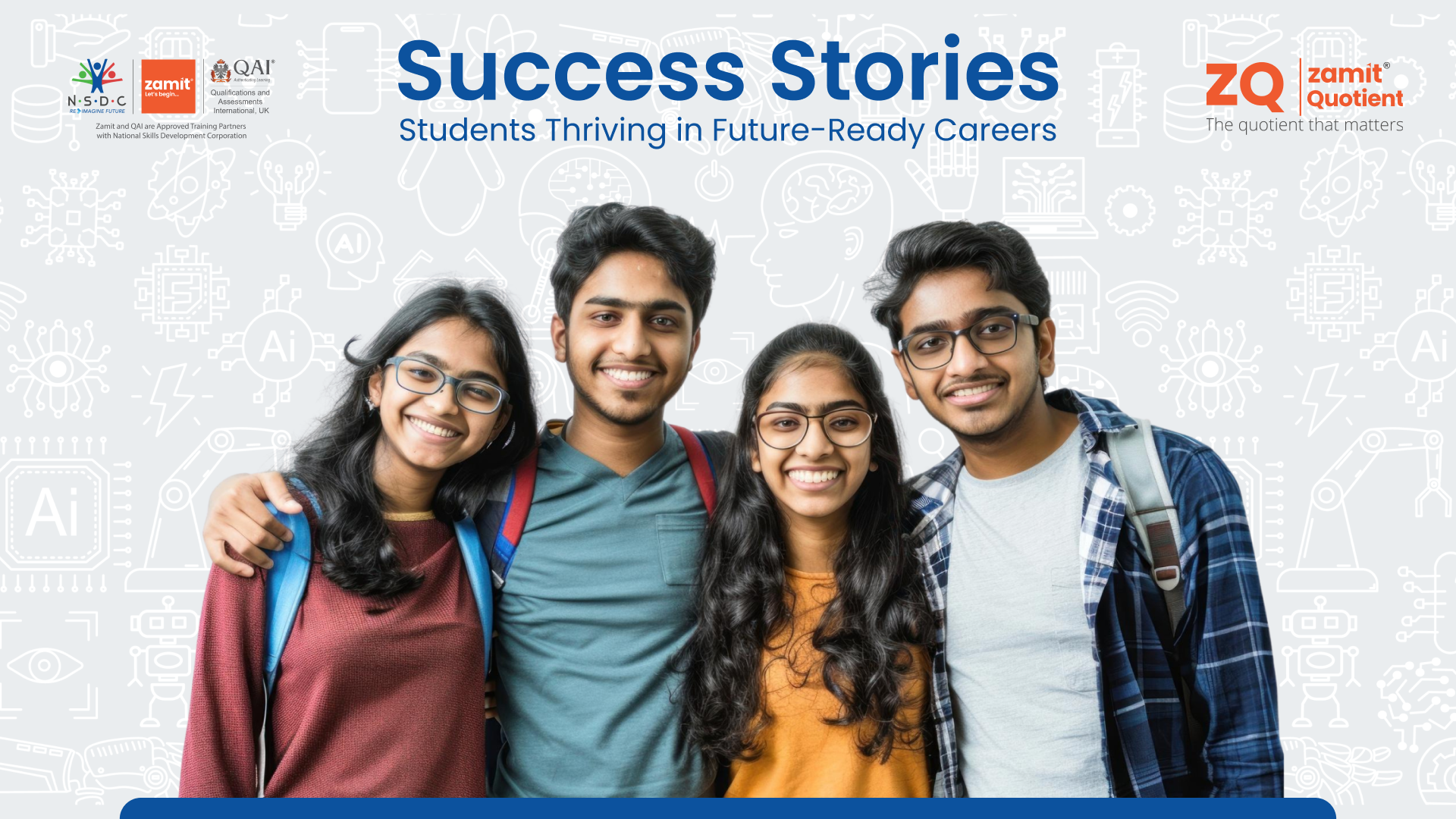
From young entrepreneurs designing sustainable startups in Bengaluru to Finnish innovators creating ethical AI, the message is clear: future-ready education transforms lives.
By combining 21st-century skills, adaptive learning, and holistic assessment, educators can empower students to move beyond traditional learning and become leaders in future-ready careers.
Zamit continues to champion this global transformation—bridging learning with employability and nurturing the next generation of skilled, confident, and future-ready citizens.
References