

November 24, 2025
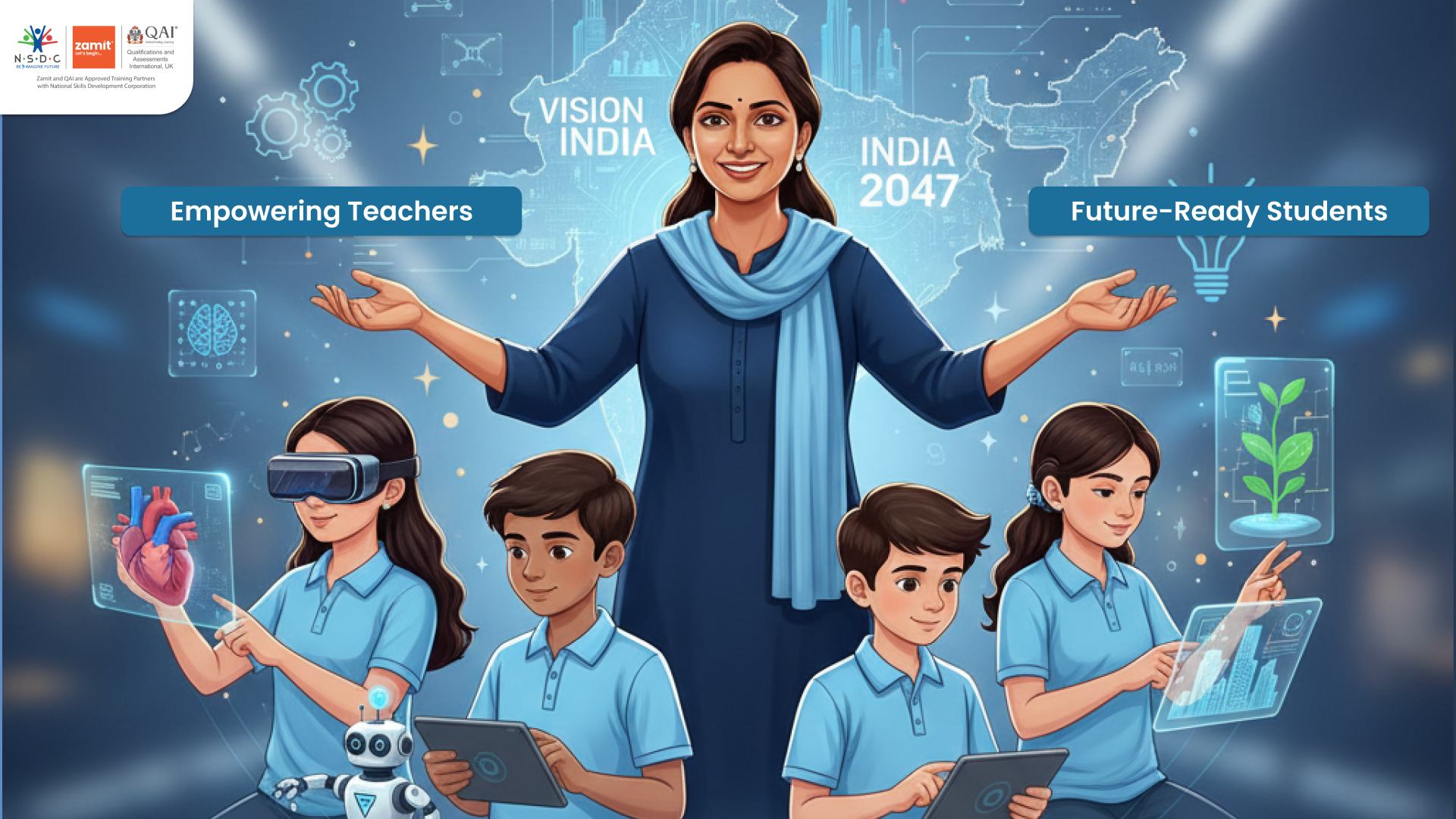
Professional development (PD) for educators is the key to unlocking 21st-century skills and future skills for students, driving educational transformation. With Vision India 2047 aiming for a skilled workforce and insights from Maria Teresa Tatto’s UNESCO article (Reimagining the future: developing teachers’ research and collaborative capacity, 2021), let’s explore how CPD empowers you to foster student development and career readiness.
The importance of 21st-century skills for students, such as critical thinking and collaboration, prepares them for a dynamic world. PD equips you to weave these skills into lessons, ensuring future readiness. Tatto’s UNESCO article (2021) emphasizes reforming teacher education for research-based teaching, aligning with NEP 2020’s 50-hour CPD mandate. By embracing PD, you model adaptive learning, fostering skills for success that ready students for career readiness.
How to develop future-ready students starts with adaptive learning—tailoring education to individual needs. PD programs train you to personalize instruction, turning gaps into opportunities. For example, a CPD on Technology-Enabled Teaching teaches AI-driven personalization, enhancing student development. Tatto (2021) highlights teacher-student collaboration, which PD supports, building 21st-century skills like problem-solving for future readiness.
The job market demands future skills for students like innovation and digital fluency for roles in AI and green tech. PD helps you integrate these into curricula, aligning with Vision India 2047’s skilled workforce goals. The CPD on Innovative Teaching Methods offers project-based strategies, as Tatto (2021) advocates for research-driven teaching. A 2023 OECD study shows such approaches boost career readiness by 20%, ensuring educational transformation.
The benefits of holistic education assessment shine in PD, evaluating 21st-century skills like resilience alongside academics. The CPD on Social-Emotional Learning (SEL) in the 21st Century trains you to assess SEL, promoting student development. A 2023 study from Stanford’s Education Lab (Miller et al., 2023) found holistic assessments improve skills for success by 22%, echoing Tatto’s call for inclusive pedagogy.
Collaboration is a vital future skill for students. PD programs like Creating a Classroom Culture of Success: Strategies for Effective Management and Collaboration equip you to foster inclusive environments. Tatto’s UNESCO article (2021) stresses collaborative pedagogies, supported by a 2024 World Bank report showing a 17% rise in educational transformation through teamwork-focused teaching, enhancing career readiness.
Vision India 2047 envisions a skilled India by 2047, with PD as a cornerstone. The CPD on Implementing the NEP 2020 Recommendations in Classroom Teaching aligns with NEP 2020’s competency-based goals. Tatto (2021) advocates for teacher agency in policy, mirroring Vision’s focus on innovation. PD drives student development, ensuring future skills for students contribute to national progress.
Start with a CPD like Innovative Assessment Methods to refine holistic education assessment. Reflect weekly on integrating 21st-century skills, and collaborate with peers for adaptive learning. A 2024 Cambridge study (Taylor, 2022) shows PD boosts teacher efficacy by 25%, enhancing skills for success. You’re the key to future readiness—take the leap!
PD fuels educational transformation, turning classrooms into spaces for future readiness. Inspired by Tatto’s vision and Vision India 2047, commit to 50 hours of CPD this year. Your growth shapes students who thrive globally!
References:
– OECD (2023). Education at a Glance 2023. OECD Publishing. https://www.oecd.org/en/publications/education-at-a-glance-2023_1d7c46d1-en.html
– Miller, T., et al. (2023). Stanford Education Lab Report, 15(2), 101-115.
– World Bank (2024). World Development Report 2024: The Middle Income Trap. World Bank Group.
– Taylor, S. (2022). Cambridge Journal of Education, 52(4), 123-137.
Academic research, included in Zamit’s iTERM programme, equips teachers with evidence-based strategies, enhancing 21st-century skills teaching and educational transformation.
PD like Technology-Enabled Teaching builds adaptive learning skills, preparing students for dynamic careers.
3. What are the benefits of holistic education assessment in PD?
It evaluates future skills for students comprehensively, boosting skills for success by 22% (Miller et al., 2023).
PD supports Vision’s skilled workforce goal through NEP Implementation CPD, driving student development.
PD equips teachers with 21st-century skills to foster student development, aligning with NEP 2020’s mandate.