
April 30, 2026
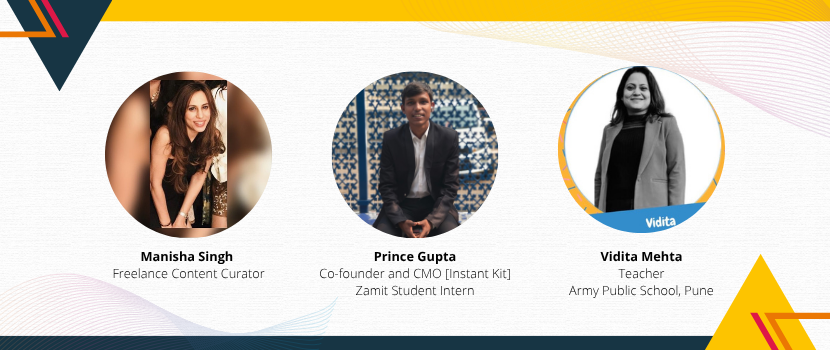
Manisha Singh
Freelance Content Curator

The “What Do You Want to Be ?” Question Just Got A Whole Lot Earlier.
Not too long ago, career conversations were reserved for the final years of school. One used to ask the big question,” What do you want to be when you grow up?” somewhere around grade 10. Enough time to dream, not too much time to panic. This would be an ice breaker on the first day of school. Cute answers, lots of astronauts and a surprising number of chefs. These days, the conversations are with 12-year-olds. And they’re the ones bringing it up.
Something has shifted.
The learners sitting in front of us aren’t waiting for a career counsellor to show up in class 11 with a pamphlet about engineering and medicine. They’re watching YouTube channels run by teenage entrepreneurs. They’re seeing 16-year-olds with side hustles and 19-year-olds closing startup funding rounds. The concept of “someday” has quietly been replaced by “why not now?” Learners today are growing up in a world that is constantly evolving.
A middle school student today might already be curious about fields like design, entrepreneurship, content creation or even artificial intelligence. This early exposure is not about pushing the children to decide their future too soon, but about helping them explore possibilities with openness and confidence. Career conversations in the classroom are no longer handing out aptitude test forms. They look more like “what problems do you actually care about solving?” They’re the beginning of self-awareness.
As educators, our role is evolving alongside this shift. We are no longer just providers of information; we are facilitators of exploration. The shift isn’t cultural, it’s structural, with personalised learning platforms, real-world Project-based curricula are becoming mainstream, and students now have access to genuine skill-building far earlier than previous generations did. One has to remind oneself that students exploring early is not the same as deciding early.
The goal isn’t to lock a child into a career trajectory, it is to give them the language, the exposure and confidence to keep asking better questions about themselves. Career conversations are no longer a one-time discussion but an ongoing journey.

Prince Gupta
Co-founder and CMO [Instant Kit]
Lala Lajpat Rai College
Zamit Student Intern
School taught me how to solve problems on paper. Entrepreneurship taught me how to survive real-life problems.
I’ve had a lot of ideas—some exciting, some ambitious. I even pitched them in competitions. But here’s the truth: most of them never turned into reality. Not because they were bad, but because execution is a completely different game. And honestly, many times I didn’t even know where I was going wrong.
That’s something school never prepares you for.
In school, there’s always a right answer. In real life, there’s just trial and error. You try, you fail, you guess, you try again. No answer key. No marks. Just growth.
But one thing I’ve understood clearly—education still matters. Before jumping into anything, you need basic knowledge. I never believed in quitting studies for business. Instead, I see startups as something you can build side by side. At an early stage, it’s not about going “all in”—it’s about learning smartly while doing.
Another thing no one teaches? Self-awareness. When your ideas don’t work, you’re forced to face yourself—your lack of discipline, planning, or consistency. It’s uncomfortable, but it’s real learning.
And then comes resilience. Not the motivational type—but the quiet one. The kind where things don’t work, and you still show up the next day.
If there’s one thing my journey taught me, it’s this: ideas don’t change your life—execution does.
So to every student thinking big—don’t just dream.
Start. Mess up. Learn. Repeat.
Because real education? It begins when things don’t go as planned.
Vidita Mehta
Educator
Army Public School, Dighi, Pune

What is Career Conversation?
Career conversation is a meaningful exchange between a guide and a potential candidate, usually a student or aspirant, that dives into the aspects of their career that hold significant value, which helps in fostering genuine and impactful career growth happens through the power of effective and ongoing career conversations. These conversations, when done well, can provide deep insights and self-awareness, while also sparking exploration of future possibilities and opportunities. Encouraging these meaningful conversations leads to higher motivation and engagement. While it is common for colleges to expect students to take control of their own career paths, it’s important to recognise that career conversations are a collaborative effort.
Is Career Conversation an Integral Part of the Indian Education System?
When it comes to improving the performance of our education system, much of the debate usually focuses on academic content, teacher quality and school funding, all of which undoubtedly matter, but if success is measured by how well students ultimately do in the workforce after they leave formal education, there’s another critical factor that needs to be addressed, which is the guidance and advice students receive as they navigate through their education toward a career. Traditionally, most of the career counselling that students receive in middle and high school in our country is focused on college-level education.
While making a decision about higher education is undeniably critical to a student’s future trajectory, making those choices without serious conversations about career aspirations ultimately does a disservice to far too many students. When done well, career-focused advising and exploration opportunities help students to not only understand the range of options open to them, but to see the relevance of what they’re doing and learning in school. Knowledge about a particular career or interest area can set a student on a clearer path toward his goal, including informing his choice of which colleges to consider and, importantly, which majors or programs to pursue.
Need for Career Conversations in the Indian Education System.
India stands at a decisive moment in history. With one of the world’s youngest populations, our classrooms are filled with potential that can transform the nation’s economic and social landscape. Yet, the transition from classrooms to careers is often clouded by uncertainty, societal pressure, and limited exposure. Too often, students make career choices based on convention rather than conviction. The traditional emphasis on engineering, medicine, or civil services has overshadowed equally rewarding fields in technology, design, entrepreneurship, social sciences, and the arts.
Early career guidance is the corrective to this narrow vision. In the present scenario, half of college graduates end up working in jobs that don’t use their degree, illustrating the critical importance of making well-informed decisions about what to study. Building that knowledge base and the confidence to navigate the maze through education to career takes time, which should start ideally in middle school.
Beginning career exploration conversations and activities in middle school doesn’t mean locking students into a career choice before they even get a driver’s license. Early career exploration should be fun and engaging, as it is about showing students the wide variety of options available to them and helping them figure out what sparks their interest, what they’re good at and what different careers look like day-to-day. Helping students build a deeper knowledge base about careers will ultimately help them understand what they need to do if they want to pursue a particular path.
Too many students still stumble into a career through a combination of happenstance and luck rather than deep exploration and intentional planning. Many discover what they love and are good at only after years of studying or working in an unrelated field, which often means wasted time and money. While students’ career interests will grow and evolve as they do, our education systems can do more to help more of them become fulfilled, economically successful adults by providing better, earlier opportunities to explore careers and understand how to pursue them.
“Choose a job you love, and you will never have to work a day in your life.” The wisdom of Confucius reminds us that careers are not merely about earning a livelihood but are about aligning passion with purpose. For the young generation of India, stepping out of classrooms into the wider world, this truth is especially relevant. As the future workforce of our nation, students carry both the privilege and responsibility of shaping India’s destiny. Early career guidance is the compass that ensures their journey is not accidental but intentional, helping them discover not just jobs, but callings.
Why are Career Conversations shifting earlier for Students?
→ Concerns about the impact of AI on future jobs. To counter the concerns about job prospects and the impact of AI on entry-level work, college freshers are increasingly pursuing internships early in their academic careers to gain a competitive edge in the job market. This helps them to improve their prospects of landing a job as compared to their peers, who only devote their time to academics.
→ Early Access to Coaching and Mentorship. To gain a competitive edge early on in their career, parents are providing early coaching to their children, to provide hands-on experience and to gain a competitive edge over other students who start late in their academic pursuit. Schools are also providing early career guidance to students to help them choose their careers wisely.
→ Shift in Focus. Students are now focusing on developing skills that are essential for future careers, such as communication, leadership and teamwork, rather than just academic success.
→ Better Awareness. Students don’t choose a career in year one, but they have started understanding themselves as future professionals, as the investment in early career readiness pays dividends in retention and engagement. More importantly, it delivers on the promise that higher education should prepare students not just for their next semester, but for their next chapter in life. More options of subjects to choose as electives help students pick up more skills, which help them in their careers.
The rise of AI has not made career conversational optional, but made it essential. When the future changes fast, preparation can’t be static. Career conversations are increasing and happening early, not because students are confused, but because educators finally acknowledge that knowledge without direction is wasted effort. Schools that invest in career conversations give students a compass in a world where maps change daily, and for students navigating that world, direction matters more than certainty.