
April 30, 2026
Examples of emerging interdisciplinary combinations include:
• AI + Design → Human-centred AI products
• Psychology + Data → Behavioural insights and digital wellbeing
• Sustainability + Business → Green entrepreneurship
• Technology + Arts → Immersive media and digital experiences
1. Rise of Climate Careers
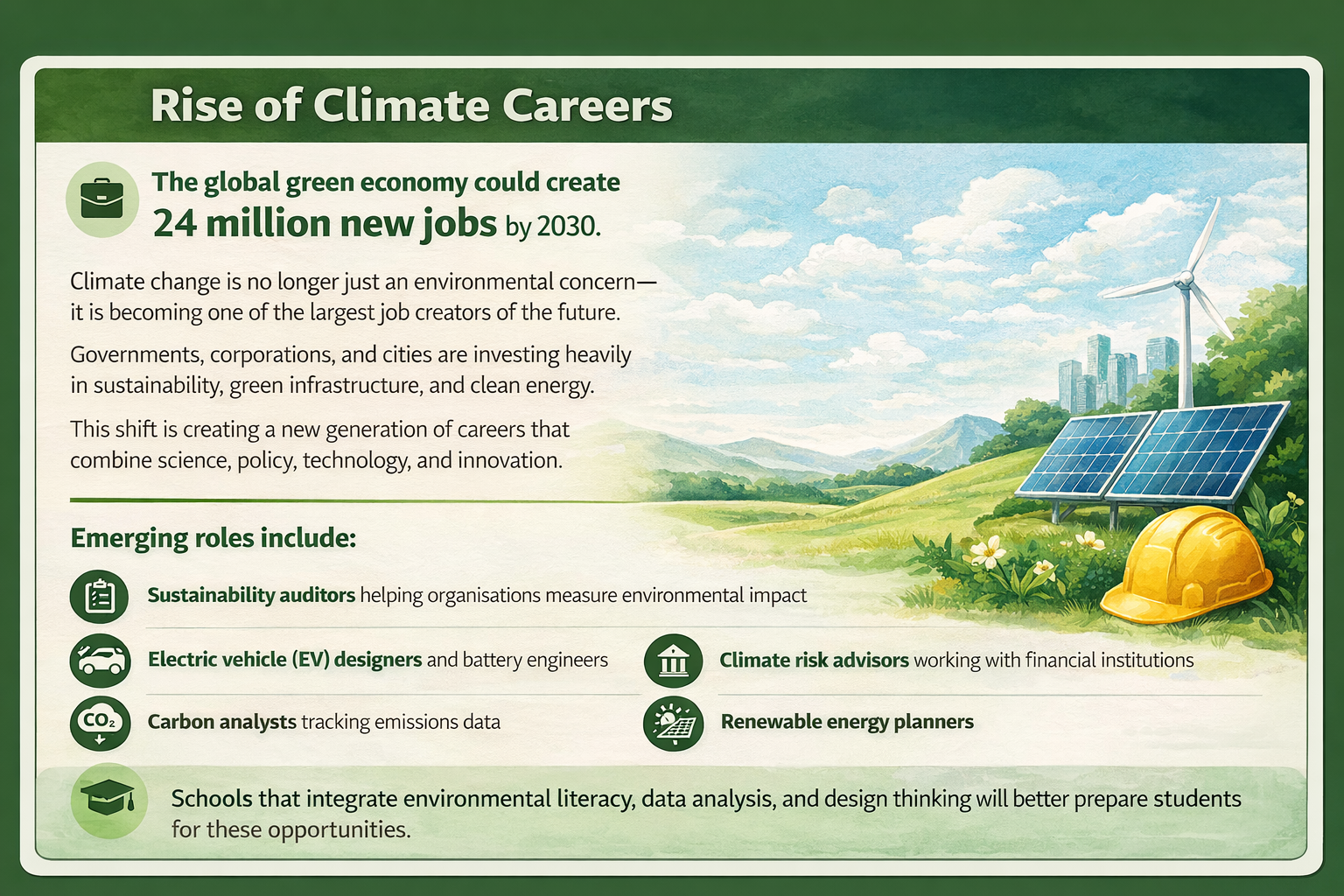
The global green economy could create 24 million new jobs by 2030.
Climate change is no longer just an environmental concern—it is becoming one of the largest job creators of the future. Governments, corporations, and cities are investing heavily in sustainability, green infrastructure, and clean energy.
This shift is creating a new generation of careers that combine science, policy, technology, and innovation.
Emerging roles include:
• Sustainability auditors helping organisations measure environmental impact
• Electric vehicle (EV) designers and battery engineers
• Carbon analysts tracking emissions data
• Climate risk advisors working with financial institutions
• Renewable energy planners
Schools that integrate environmental literacy, data analysis, and design thinking will better prepare students for these opportunities.
2. Creator Economy as a Career Path
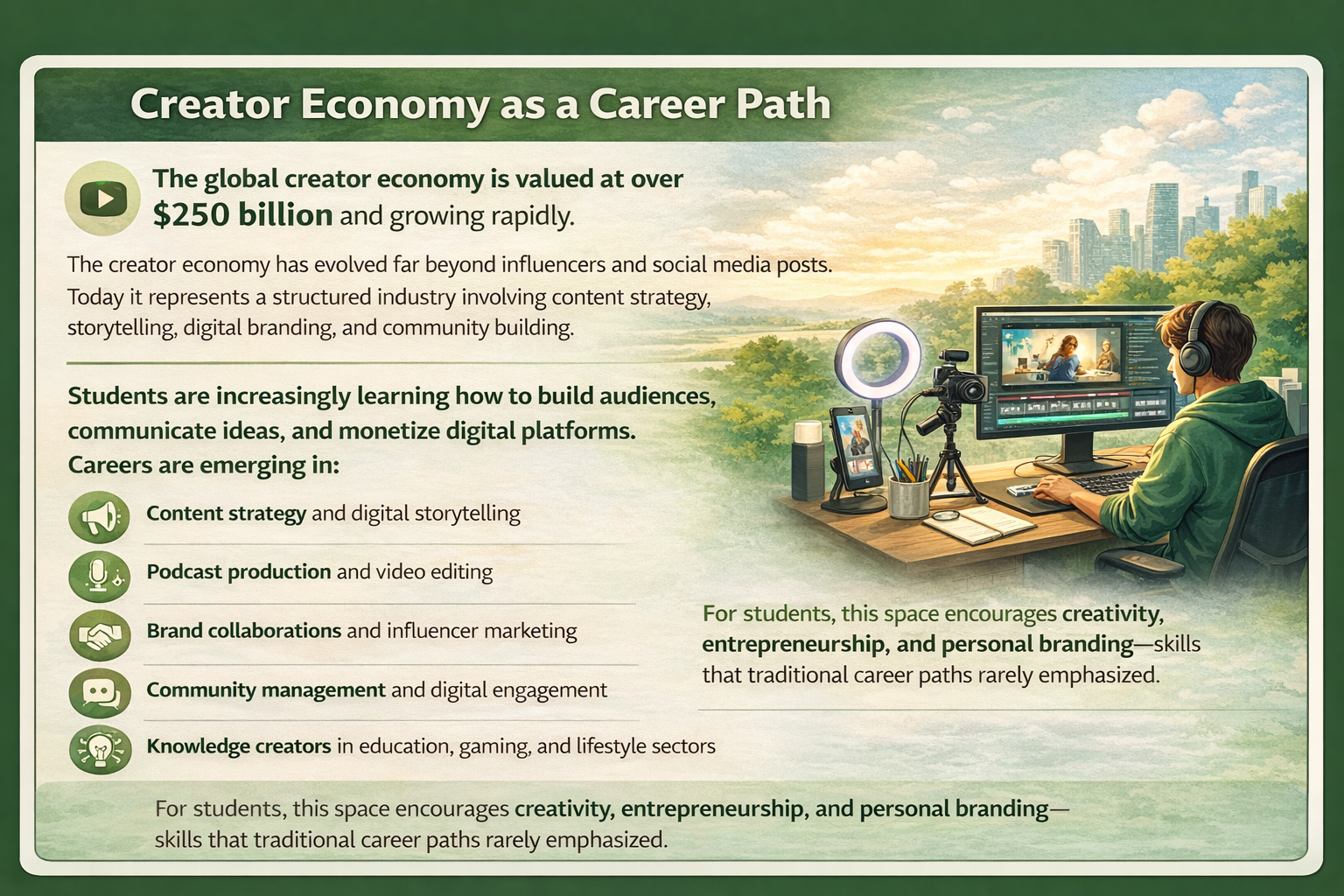
The global creator economy is valued at over $250 billion and growing rapidly.
The creator economy has evolved far beyond influencers and social media posts. Today it represents a structured industry involving content strategy, storytelling, digital branding, and community building.
Students are increasingly learning how to build audiences, communicate ideas, and monetise digital platforms. Careers are emerging in:
• Content strategy and digital storytelling
• Podcast production and video editing
• Brand collaborations and influencer marketing
• Community management and digital engagement
• Knowledge creators in education, gaming, and lifestyle sectors
For students, this space encourages creativity, entrepreneurship, and personal branding—skills that traditional career paths rarely emphasise.
3. Entrepreneurship at 16
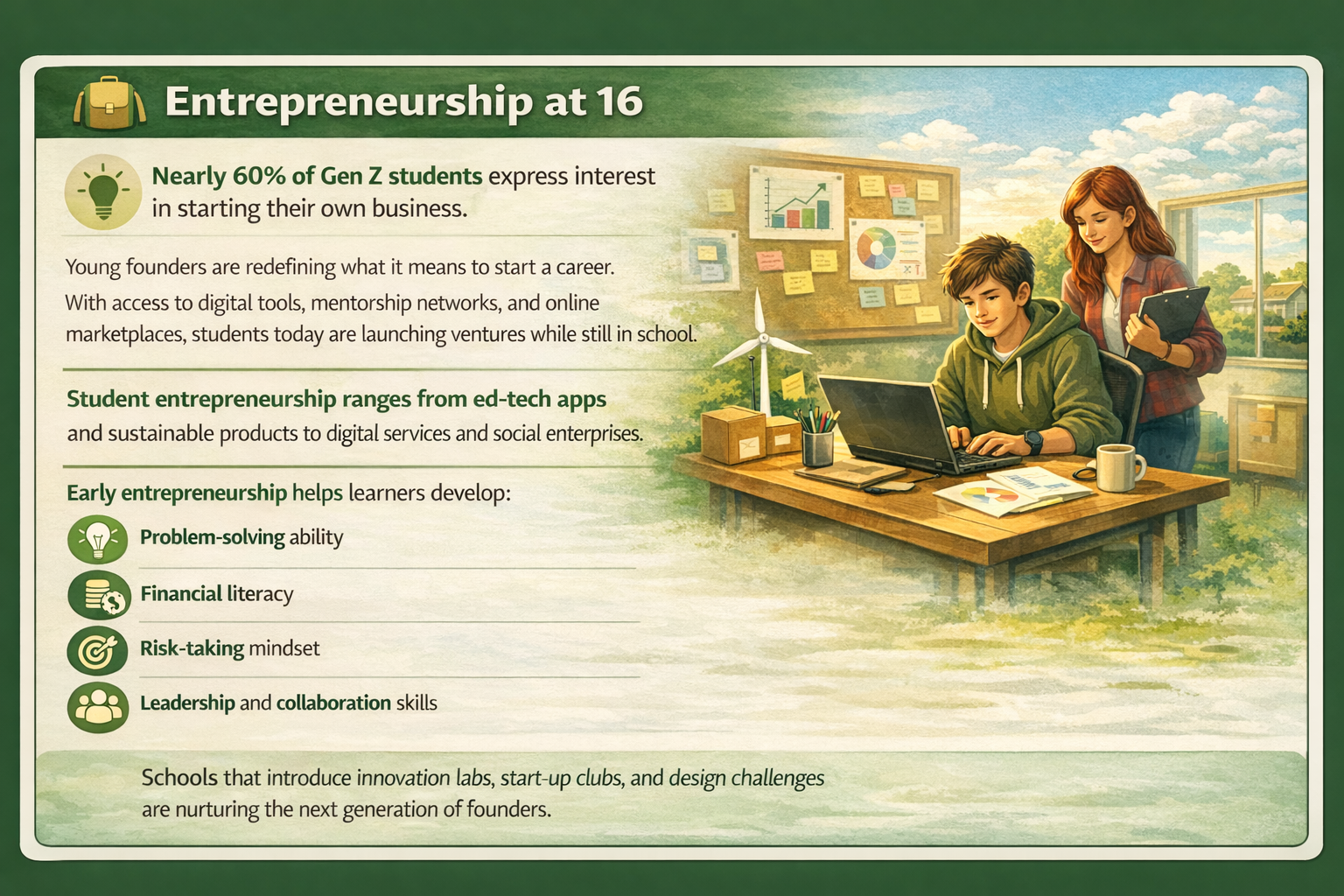
Nearly 60% of Gen Z students express interest in starting their own business.
Young founders are redefining what it means to start a career. With access to digital tools, mentorship networks, and online marketplaces, students today are launching ventures while still in school.
Student entrepreneurship ranges from ed-tech apps and sustainable products to digital services and social enterprises.
Early entrepreneurship helps learners develop:
• Problem-solving ability
• Financial literacy
• Risk-taking mindset
• Leadership and collaboration skills
Schools that introduce innovation labs, start-up clubs, and design challenges are nurturing the next generation of founders.
4. Global Classrooms
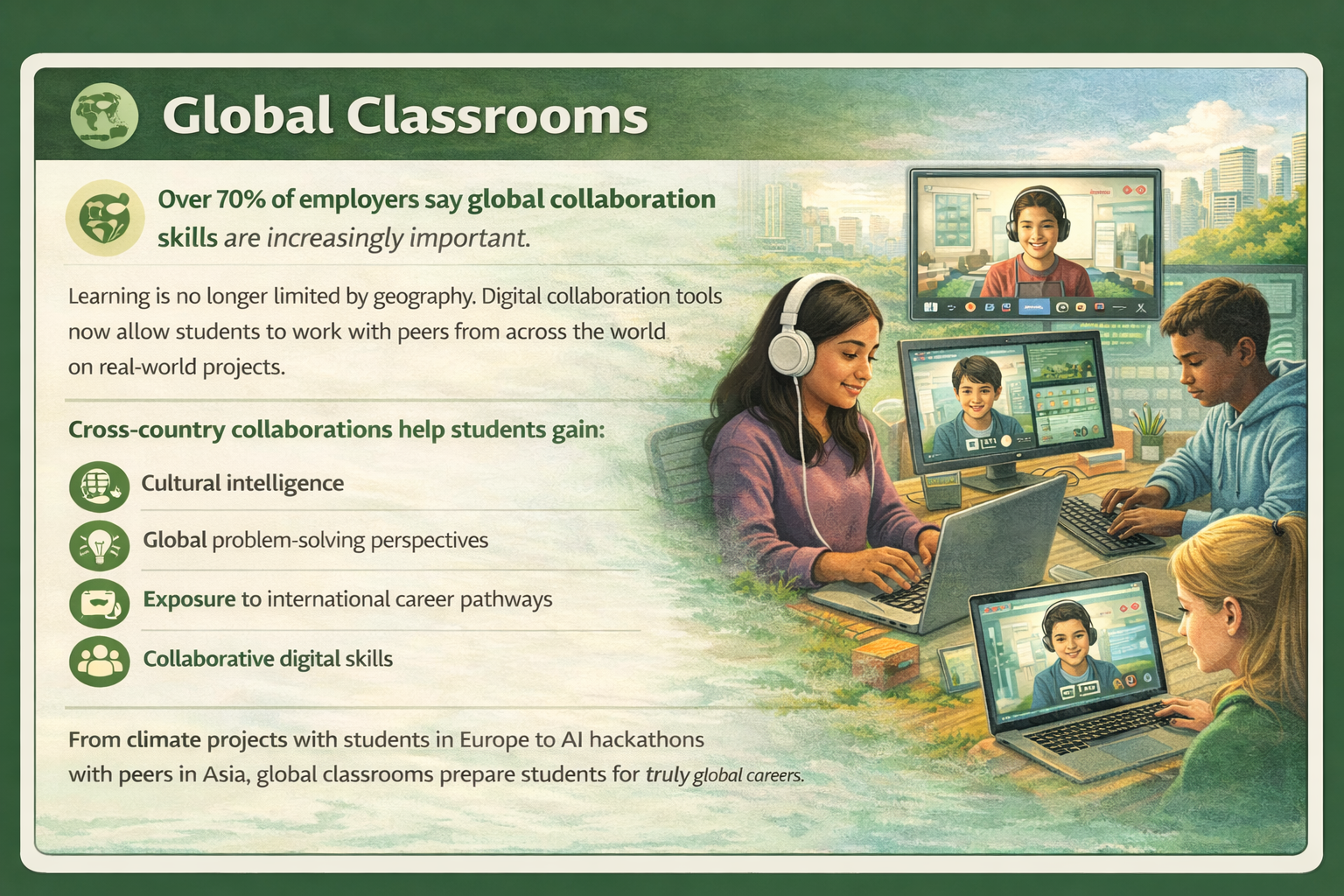
Over 70% of employers say global collaboration skills are increasingly important.
Learning is no longer limited by geography. Digital collaboration tools now allow students to work with peers from across the world on real-world projects.
Cross-country collaborations help students gain:
• Cultural intelligence
• Global problem-solving perspectives
• Exposure to international career pathways
• Collaborative digital skills
From climate projects with students in Europe to AI hackathons with peers in Asia, global classrooms prepare students for truly global careers.